Exceptional Gemstones · An Editorial Guide
Emeralds
A specialist guide to natural emeralds: what creates their green colour, how Colombia, Zambia and Brazil differ as major sources, why inclusions are expected, how clarity enhancement is evaluated and which factors define quality, rarity and value.
What is an emerald?
The defining green variety of beryl.
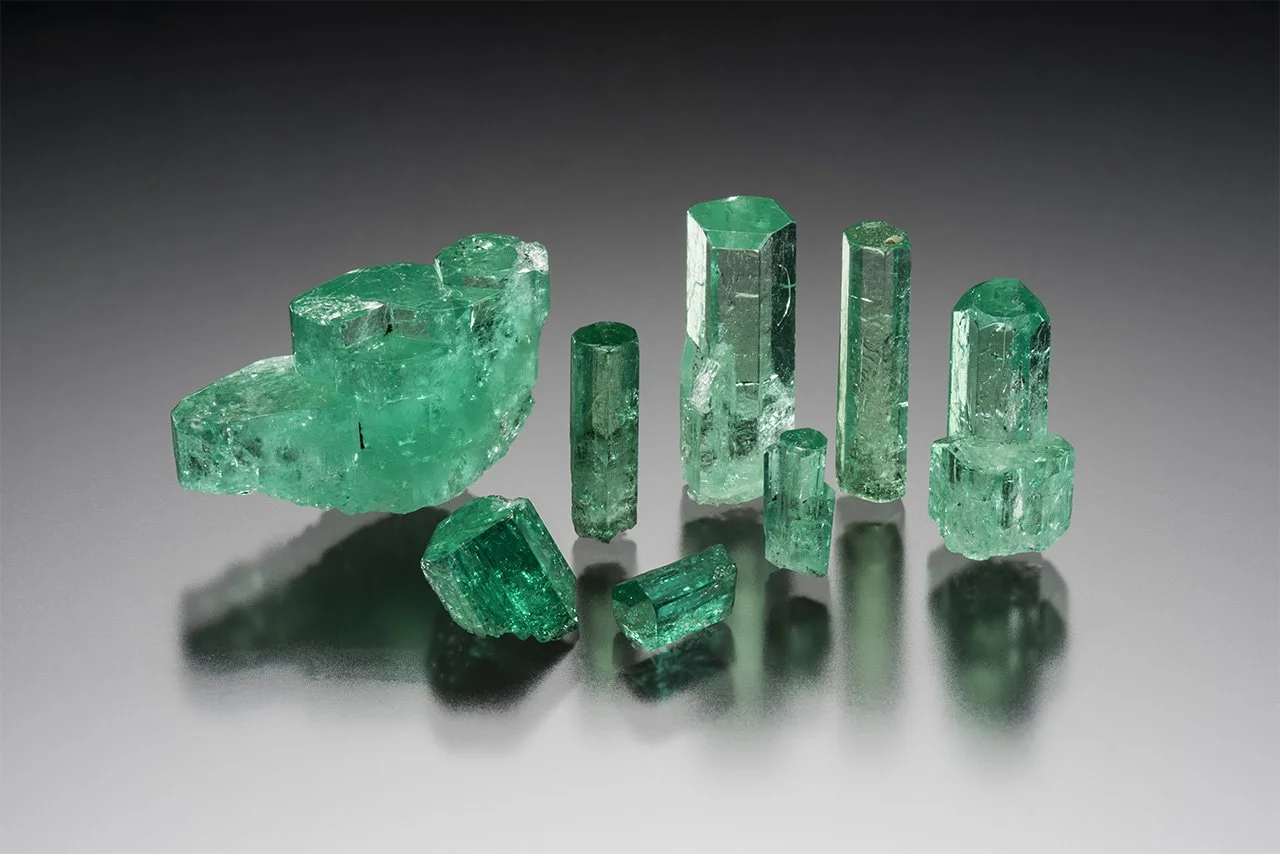
Emerald is the green gem variety of beryl, the same mineral family that includes aquamarine. Its colour is produced principally by chromium and vanadium, while iron can influence the exact appearance. Fine emeralds range from bluish green to pure green, with vivid saturation and a tone that remains open rather than excessively dark.
Unlike diamond, emerald is not evaluated through a universal clarity grading scale. Inclusions are expected and often visible to the unaided eye. Collectors therefore look at transparency, colour, the nature and placement of inclusions, cut, size, treatment and geographic origin as an interconnected whole.
Colour & chemistry
What makes an emerald green?
Chromium, vanadium and iron influence emerald colour. Their relative concentrations affect hue and saturation, creating stones that can appear pure green, slightly bluish green or, at the limits of the emerald colour range, more yellowish or blue. GIA identifies bluish green to pure green, with vivid saturation and a medium-to-medium-dark tone, as the most desirable colour range.
Colour must be judged together with transparency. A saturated emerald that is too dark can lose life, while a very transparent stone with weak saturation may lack the depth associated with fine emerald. Geographic stereotypes are useful only as broad market shorthand: emerald appearance overlaps significantly between sources.
Emerald is fundamentally a colour gemstone: the finest stones combine vivid green with enough transparency for the colour to appear luminous rather than closed.
Geographic origin
Colombia, Zambia
and Brazil.
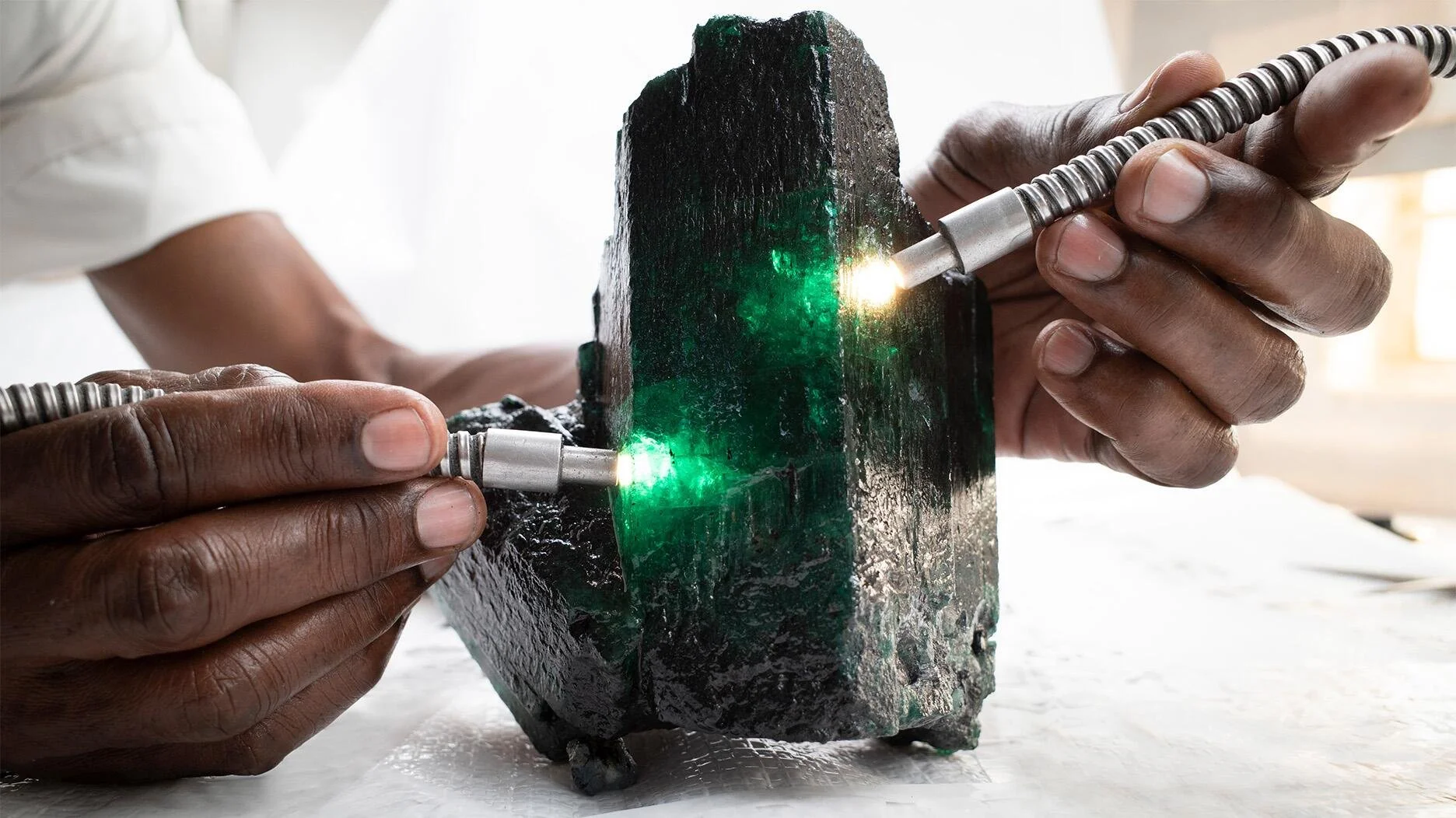
Geographic origin can influence provenance and market perception, but it should never be assumed from colour alone. GIA combines microscopy, spectroscopy and trace-element chemistry to distinguish important emerald sources.
Colombia
Colombia has supplied celebrated emeralds for centuries, with famous districts including Muzo, Chivor and Coscuez. Fine Colombian stones are often associated with rich, warm green colour and comparatively low iron content, but quality varies widely and origin requires laboratory confirmation.
Zambia
Zambia is one of the most important modern sources of high-quality emerald. Kafubu material often contains more iron than Colombian emerald and may show cooler bluish-green colour. GIA notes that fine Zambian stones can rival exceptional emeralds from any origin.
Brazil
Brazil hosts several emerald-producing regions and has contributed important material to the international market. Brazilian stones can overlap visually with other origins, so inclusions, spectroscopy and trace-element chemistry are used together when geographic origin matters.
Clarity enhancement
Why are emeralds commonly clarity enhanced?
Surface-reaching fissures are common in emerald. Oils, waxes or resins can be introduced into these fractures to reduce their visibility and improve apparent transparency. This is a long-established practice in the emerald trade, but the amount of enhancement can materially affect desirability and value.
GIA does not assign emerald an overall clarity grade. Its Emerald Reports instead describe the degree of clarity enhancement as minor, moderate or significant. An important emerald should therefore be evaluated not only for colour and origin, but also for the extent of treatment and the condition of its fractures.
In emerald, treatment disclosure is part of understanding the stone itself — not an optional detail added after colour, origin and size.
Quality factors
What makes a fine emerald exceptional?
Emerald quality is assessed through the interaction of colour, transparency, inclusions, cut, carat weight, treatment and geographic origin. Colour usually leads the evaluation, but an exceptional emerald also needs enough transparency for its saturation to remain lively.
Eye-clean emeralds are extremely rare. The goal is therefore not necessarily the absence of inclusions, but a pleasing balance in which the internal features do not overly compromise beauty, transparency or durability.
Bluish green to pure green with vivid saturation and a tone that is not too dark is the classic high-quality range described by GIA.
Inclusions are expected, but excessive fissuring or cloudiness can reduce transparency and suppress the beauty of the colour.
The classic emerald cut helps protect vulnerable corners while allowing the cutter to balance colour, transparency and weight retention.
Fine stones with no or minor clarity enhancement are especially desirable. Treatment should always be read in context with the rest of the gemstone.
Colombian, Zambian and Brazilian origin can influence market positioning, but every source produces a range of quality and origin alone does not make a stone exceptional.

Rarity and value
What determines an emerald’s value?
Colour is usually the leading driver: hue, saturation, tone and overall visual life. Transparency, clarity enhancement, cut, carat weight, provenance and a respected laboratory report then shape how an individual stone is valued.
For exceptional emeralds, geographic origin can add historical and market context, particularly when supported by an independent laboratory opinion. However, GIA emphasises that every mine produces a wide quality range; a prestigious origin should never replace direct evaluation of the gemstone itself.

Exceptional scale
When emerald becomes high jewellery.
Important emerald jewellery demonstrates how colour, matching, transparency, cutting and setting interact at a scale far beyond the assessment of a single loose stone. Large suites are especially demanding because the gems must work together visually while preserving individual quality.
Auction and exhibition pieces can provide useful market context, but their results should not be treated as direct valuation benchmarks for unrelated emeralds.
Private sourcing & bespoke design
From exceptional green to a personal jewel.
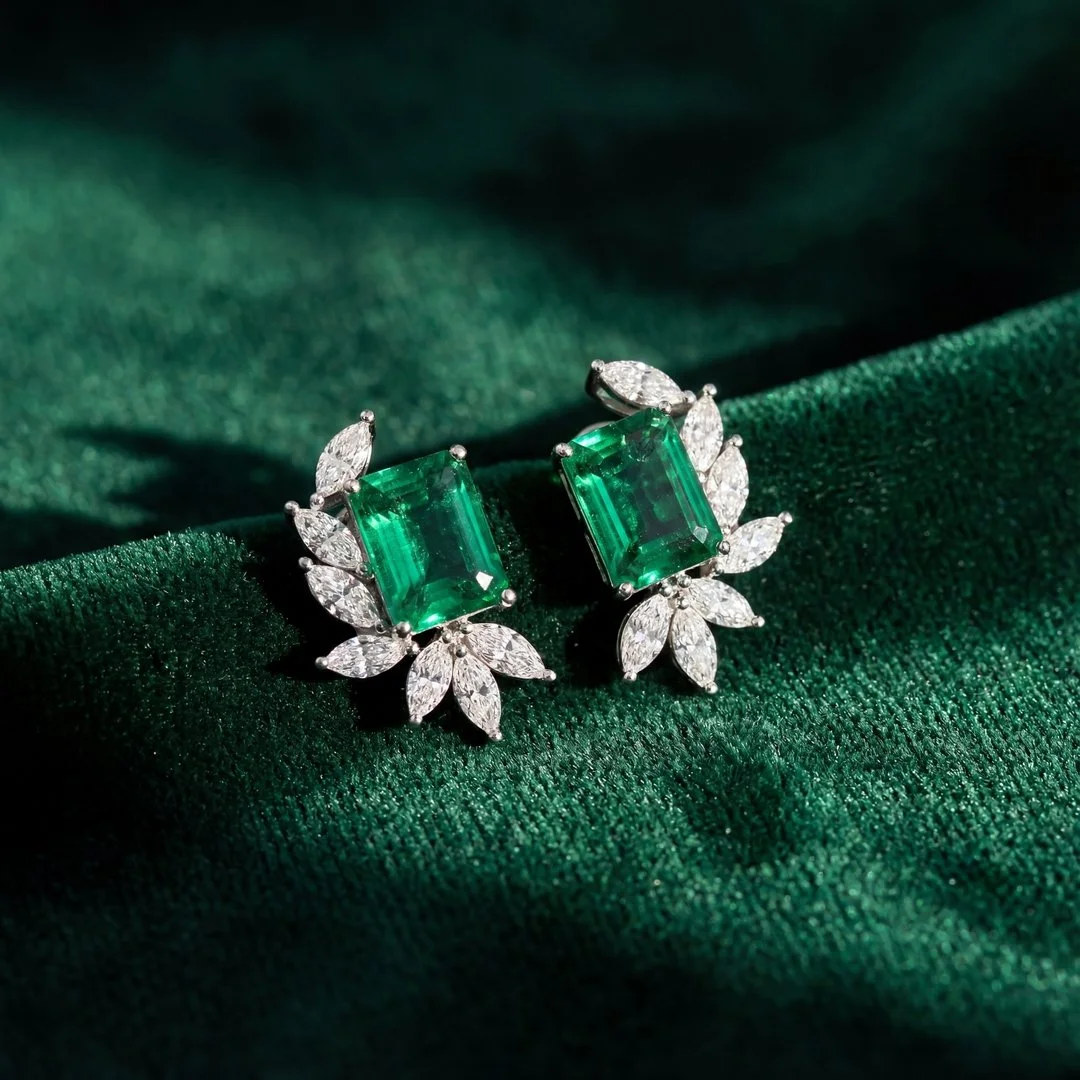
A fine emerald should be selected stone by stone. Through a private consultation in Monaco or remotely, I can help assess colour, transparency, cut, inclusions, clarity enhancement, geographic-origin documentation and suitability for a bespoke high jewellery commission.
Because emeralds naturally contain fissures and are less tough than sapphire or diamond, the setting should be designed around the specific gemstone rather than forcing the stone into a standard construction.
Discover BespokeEmerald questions
Frequently asked questions.
What makes an emerald green?
Chromium and vanadium are the principal trace elements responsible for emerald colour, while iron can influence the exact hue. Their relative concentrations determine whether a stone appears pure green, bluish green or more yellowish.
What is the best emerald colour?
GIA identifies bluish green to pure green with vivid saturation and a tone that is not too dark as the most desirable range. Transparency and even colour distribution are also important.
Are inclusions normal in emeralds?
Yes. Eye-visible inclusions are common and accepted in natural emeralds. Eye-clean stones are extremely rare. The key question is how inclusions affect transparency, beauty and durability.
Are emeralds usually treated?
Many emeralds are clarity enhanced by filling surface-reaching fissures with oils, waxes or resins. An important laboratory report should disclose detectable treatment and, where applicable, the degree of clarity enhancement.
Are Colombian emeralds more valuable?
Fine Colombian origin can add provenance and market appeal, but every deposit produces a wide range of quality. Origin should be independently determined and considered alongside colour, transparency, treatment, cut and size.
How is emerald origin determined?
Laboratories use a combination of microscopic inclusions, spectroscopy and trace-element chemistry. GIA research shows that elements including lithium, potassium, vanadium, chromium, iron, rubidium and cesium can help separate major sources.
Can emeralds be used in engagement rings?
Yes, but emeralds require more care than diamond or sapphire. Their natural fissures can affect toughness, so a protective setting and careful cleaning are particularly important for frequent wear.
How should I choose a natural emerald?
Begin with colour and transparency, then consider inclusions, cut, carat weight, treatment, durability and geographic origin when relevant. For an important stone, review a respected independent gemmological report.