Exceptional Gemstones · An Editorial Guide
Paraíba
Tourmaline
A specialist guide to Paraíba tourmaline: the copper-bearing gemstone celebrated for electric blue, neon blue and vivid blue-green colour, including its Brazilian discovery, African sources, treatments, laboratory origin determination and the factors that define quality and value.
What is Paraíba tourmaline?
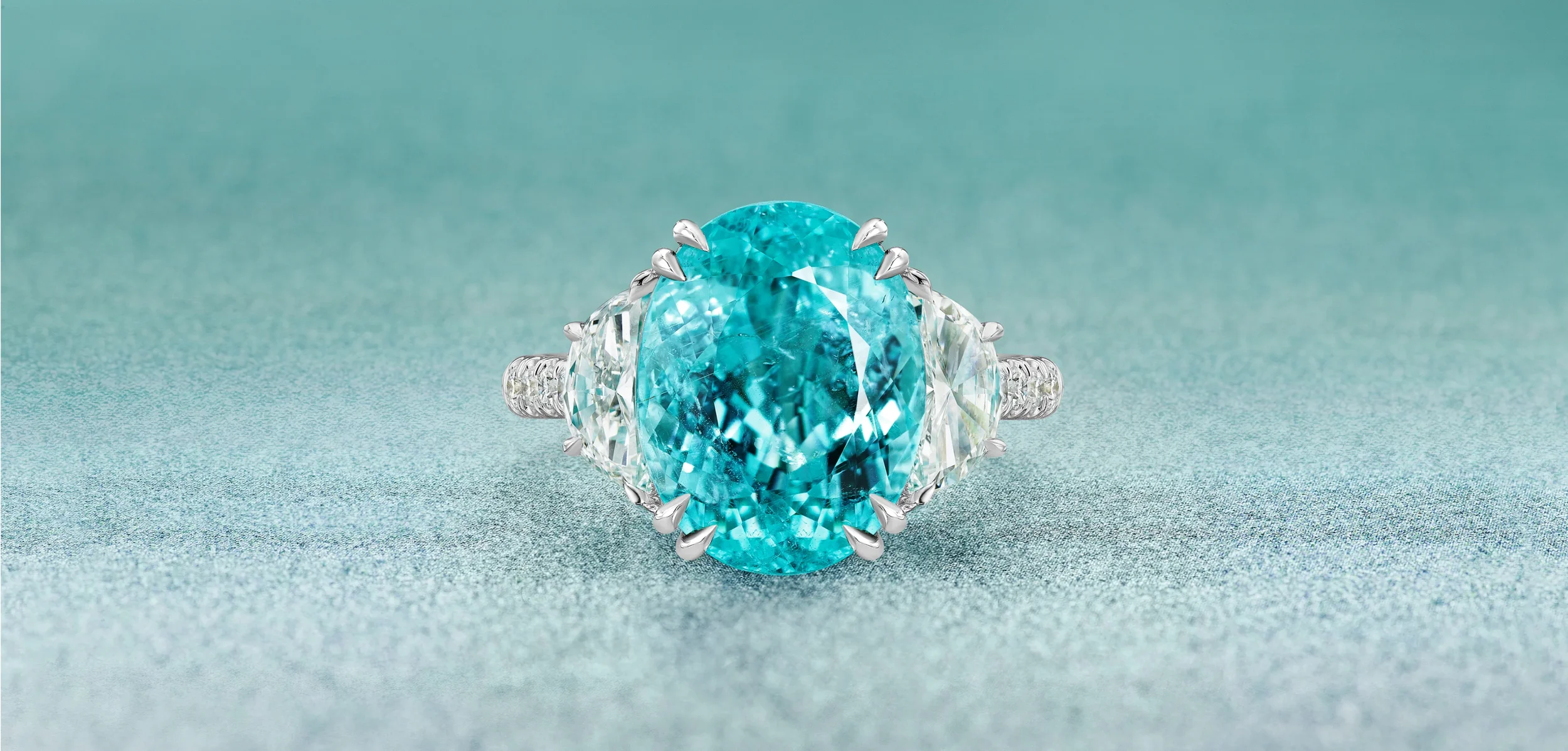
Electric colour created by copper.
Paraíba tourmaline is the trade name used for intensely coloured copper-bearing tourmaline in the blue, violet-blue, bluish green, greenish blue and related green colour range. The material was first discovered in Brazil's Paraíba State in the late 1980s and reached the international gem market in 1989.
Under the definition widely used by GIA and the Laboratory Manual Harmonisation Committee, the name is based on colour and chemistry, not exclusively on geographic origin. Qualifying copper- and manganese-bearing tourmalines may therefore originate from Brazil, Nigeria or Mozambique. This makes the laboratory report especially important: “Paraíba” describes a gem variety, while geographic origin is a separate determination.
Origin of colour
Why does Paraíba tourmaline look neon?
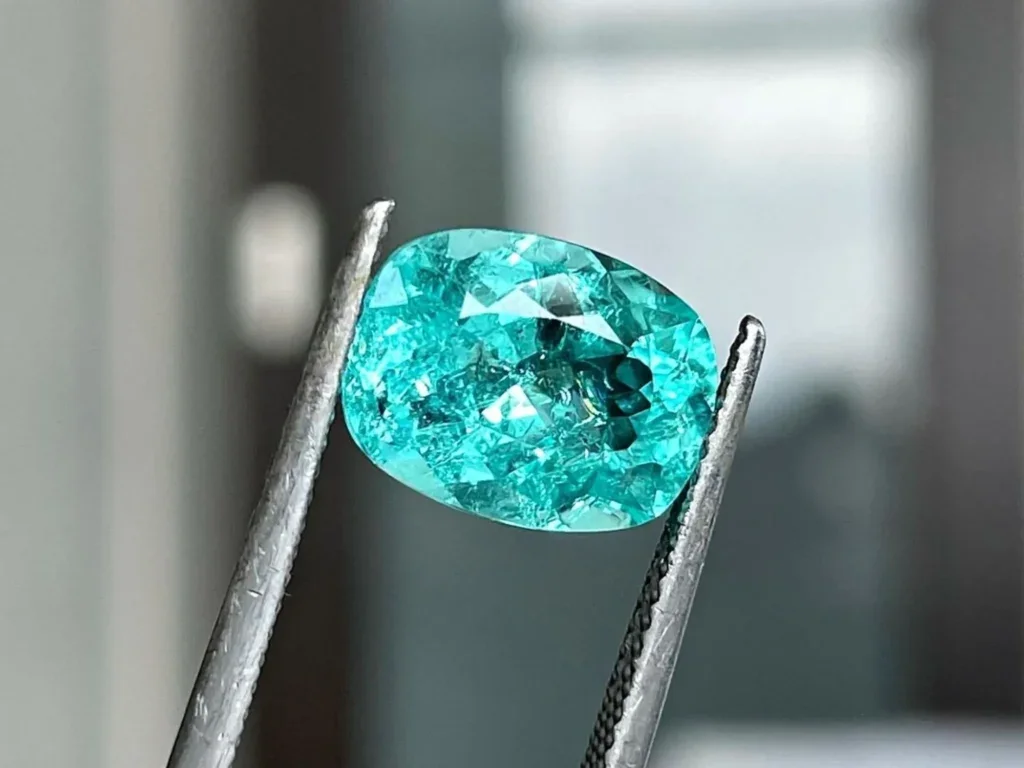
Copper is the defining colour-causing element in Paraíba tourmaline. Cu²⁺ produces strong absorption in parts of the visible spectrum, creating unusually bright blue-to-green colours that can appear almost luminous. Manganese can add violet, purple or pink components, while iron may influence greener or darker appearances.
The term “neon” is a trade description rather than an official laboratory grade. What collectors respond to is the combination of hue, saturation and tone: an exceptional stone appears vivid and open rather than dark, while retaining enough saturation to create the electric visual effect for which Paraíba is famous.
With Paraíba tourmaline, colour quality usually matters more than size. A smaller stone with exceptional saturation can be more desirable than a larger but less vivid example.
Geographic origin
Brazil, Nigeria
and Mozambique.
Paraíba tourmaline from all three countries can overlap visually. Geographic origin cannot reliably be determined by colour or standard gemmological observation alone; advanced trace-element analysis is required.
Brazil
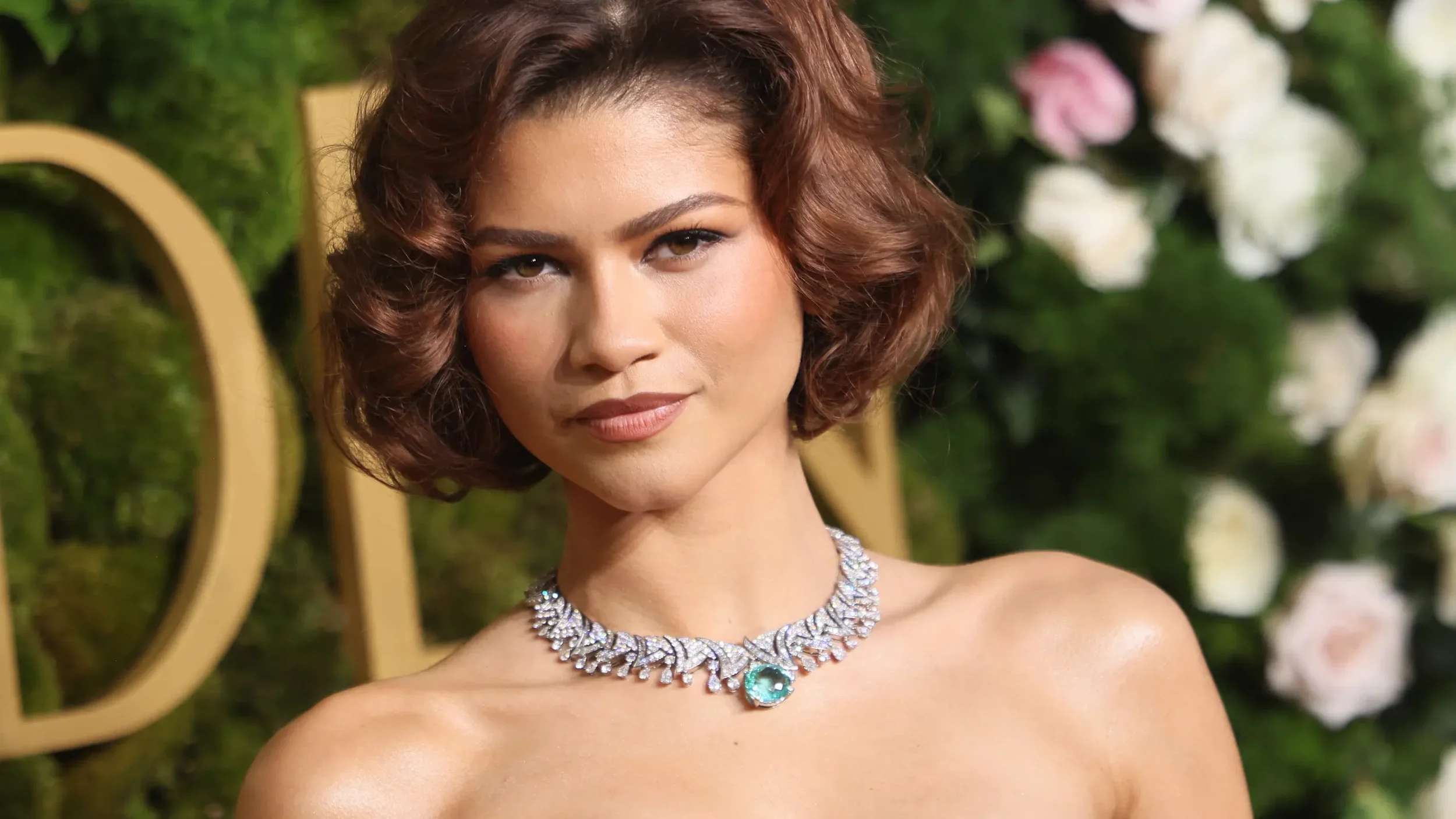
The original discoveries came from Paraíba State in northeastern Brazil, followed by material from neighbouring Rio Grande do Norte. Fine Brazilian stones are often especially prized in the market, although colour ranges overlap with African material and origin must be laboratory determined.
Nigeria
Copper-bearing tourmalines from Nigeria expanded the known geographic range of the gem in the early twenty-first century. Nigerian material can show vivid blue, violet-blue and greenish blue colours that overlap strongly with Brazilian and Mozambican stones.
Mozambique
Significant copper-bearing tourmaline was recovered near Mavuco in Mozambique from 2001, with its copper content recognised shortly after. Mozambique broadened availability and is an important source of larger copper-bearing tourmalines, including vivid blue-to-green examples.
Heat treatment
Is Paraíba tourmaline heated?
Heat treatment is common in copper-bearing tourmaline. Heating can reduce manganese-related pink or violet absorption and reveal or intensify blue to bluish-green colours driven by copper. Historical GIA research describes relatively low to moderate temperatures being used for this purpose.
The treatment does not create copper; the copper is already part of the tourmaline's chemistry. Detecting whether a particular copper-bearing tourmaline has been heated can be difficult, and in many cases there is no definitive routine gemmological test that separates heated from unheated material. Treatment disclosure should therefore be considered alongside the wording and limitations of the laboratory report.
Quality factors
What makes a Paraíba tourmaline exceptional?
Paraíba is evaluated differently from a colourless diamond. There is no universal numerical grading scale for beauty. Instead, quality is judged by the interaction of colour, tone, saturation, transparency, clarity, cut, size, geographic origin and laboratory documentation.
GIA emphasises colour as the key factor. The most desirable stones typically combine vivid saturation with a light-to-medium tone that allows the colour to remain bright rather than overly dark. Because fine rough is so valuable, Paraíba tourmalines are frequently custom cut to preserve colour and weight.
Electric blue, neon blue and highly saturated blue-green colours are especially sought after; tone should remain open enough for the colour to glow.
Inclusions are common in tourmaline and may be accepted when colour is exceptional, but transparency and lively light return remain important.
Ovals and pears are common, but fine material is often custom cut to balance saturation, brightness, weight retention and the orientation of colour.
Fine Brazilian stones are frequently small. Larger Mozambican and Nigerian examples exist, but a larger stone is not automatically better than a smaller, more vivid one.
Brazilian origin can carry a premium, but origin and beauty are separate questions. Exceptional stones exist from Brazil, Nigeria and Mozambique.
Laboratory reports
Why the laboratory report matters.
Standard gemmological properties and microscopic inclusions are not sufficient to reliably separate Paraíba tourmaline from Brazil, Nigeria and Mozambique. GIA uses highly precise quantitative trace-element analysis, including LA-ICP-MS, to compare elements such as copper, zinc, gallium, strontium, tin and lead against reference samples of known provenance.
In many cases a geographic origin can be concluded, but some stones fall within overlapping chemical fields and may receive an inconclusive origin. For an important purchase, the report should be read carefully for identification, colour description, geographic origin when offered, and any treatment comments the laboratory is able to make.
GIA evaluates tourmaline but does not assign it a universal quality grade. Its coloured-stone reports document identification and observable characteristics, and an Identification & Origin Report can provide a geographic-origin opinion for Paraíba tourmaline when the evidence is sufficient.
“Paraíba” and “Brazilian Paraíba” are not interchangeable descriptions. The first describes qualifying copper-bearing tourmaline; the second makes a geographic-origin claim that requires supporting laboratory evidence.
Rarity and value
What determines Paraíba tourmaline value?
Colour is usually the first consideration: hue, saturation, tone and the immediate visual impression of brightness. Geographic origin, carat weight, transparency, clarity, cut quality and documentation then influence how an individual stone is positioned in the market.
Brazilian origin is often valued at a premium, particularly for fine material from the original deposits, but origin should not replace visual assessment. Mozambique has produced important larger stones, while Nigerian material can also show exceptional colour. As with all rare gemstones, public auction results illustrate demand but do not guarantee future financial performance.

Recent market context
Collector demand remains visible.
Auction results should never be treated as a price guide for an unrelated stone, but they can show how strongly exceptional Paraíba tourmaline continues to attract attention when colour, size, presentation and provenance align.
Christie's Paris · December 2025
Christie's reported that a loose Paraíba tourmaline sold for €825,500 in its December 2025 Paris jewellery sale, approximately ten times its presale estimate. The result is a useful signal of collector interest, but it should not be used as a direct valuation benchmark for other stones.

Private sourcing & bespoke design
From electric colour to a personal jewel.
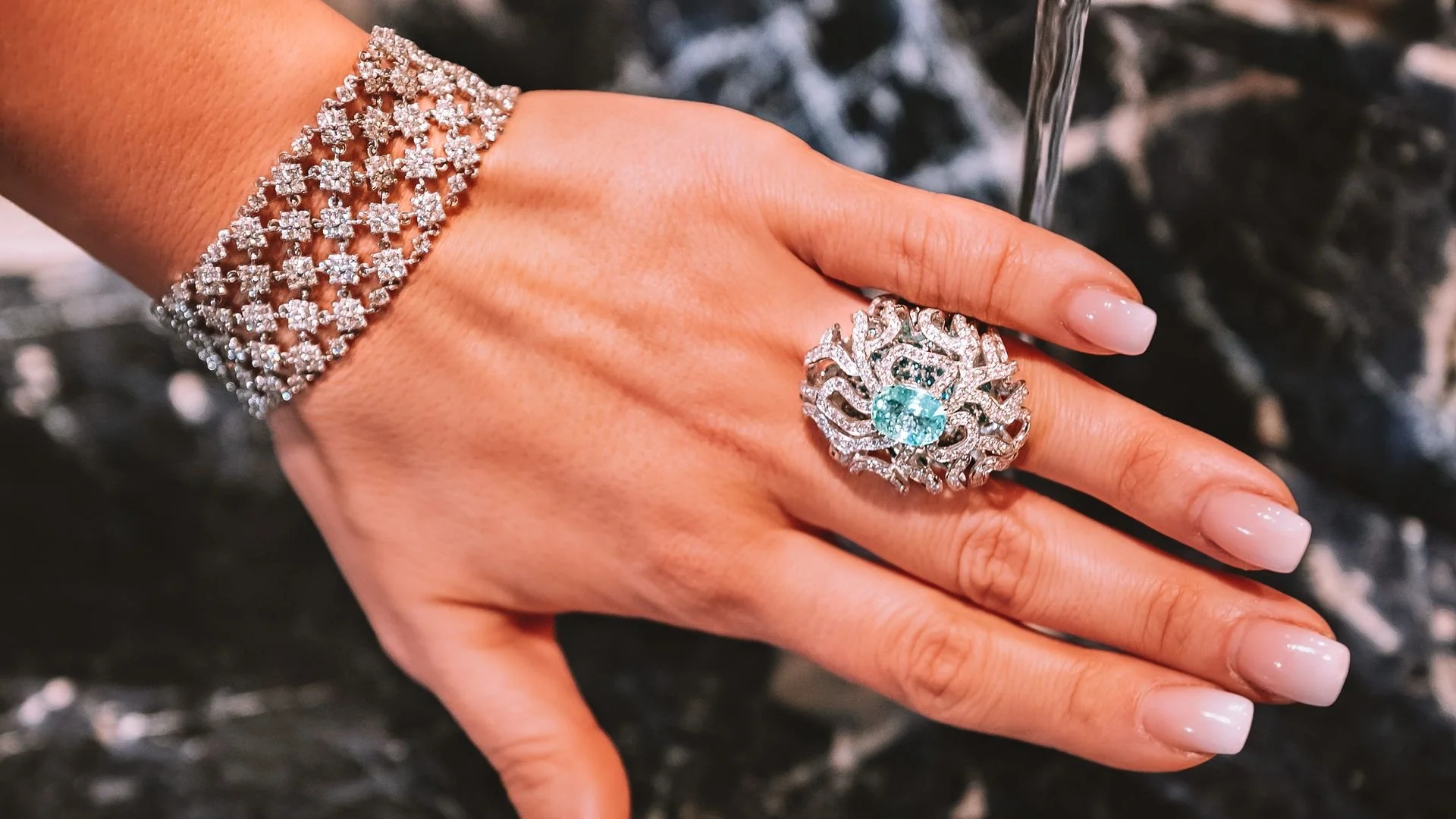
Paraíba tourmaline should be selected stone by stone. Through a private consultation in Monaco or remotely, I can help assess colour, tone, saturation, transparency, cut, geographic-origin documentation and suitability for a bespoke high jewellery commission.
The objective is not simply to find the largest available stone, but the example whose colour and character justify becoming the centre of the design.
Discover BespokeParaíba tourmaline questions
Frequently asked questions.
What makes a tourmaline a Paraíba?
Paraíba tourmaline is a copper- and manganese-bearing tourmaline in a recognised vivid blue-to-green colour range. Under the definition used by GIA and LMHC, qualifying material may come from Brazil, Nigeria or Mozambique.
Does Paraíba tourmaline have to come from Brazil?
No. The name originated with the discovery in Brazil's Paraíba State, but the modern gem-industry definition is not restricted to one country. Geographic origin should be stated separately on an appropriate laboratory report.
Why is Paraíba tourmaline neon blue?
Copper is the principal cause of the characteristic vivid blue-to-green colour. Its absorption of visible light can create unusually bright, saturated hues that the trade often describes as electric or neon.
Which origin is most valuable?
Fine Brazilian stones are typically valued more highly in the market, especially material associated with the original deposits. However, top-quality Nigerian and Mozambican stones can also be exceptional, and colour quality should be evaluated independently from origin.
Is Paraíba tourmaline usually heated?
Heat treatment is common and can reduce manganese-related pink or violet components, allowing copper-driven blue and green colours to become more visible. Determining heat treatment can be difficult, so the wording of the laboratory report should be reviewed carefully.
How is Paraíba geographic origin determined?
Standard gemmological tests are not sufficient. GIA uses quantitative trace-element chemistry, including LA-ICP-MS, to compare the stone with reference material from Brazil, Nigeria and Mozambique. Some results may remain inconclusive where chemical fields overlap.
What should I look for when buying Paraíba tourmaline?
Begin with a respected laboratory report, then evaluate colour, tone, saturation, transparency, cut, inclusions, carat weight and geographic origin when relevant. The best stone is not necessarily the largest; colour is often the decisive quality factor.
Can Paraíba tourmaline be used in an engagement ring?
Yes, but tourmaline is softer and less resistant to abrasion than diamond. A ring intended for frequent wear should use a protective setting and be worn with appropriate care, particularly around the girdle and exposed facet edges.