Coloured Gemstone Engagement Rings: Beyond the Diamond
For generations, the diamond solitaire has defined the engagement ring. But an engagement ring does not have to follow a formula.
For couples looking for something more personal, coloured gemstones open an entirely different world: the softness of a pink sapphire, the depth of an emerald, the intensity of a ruby or the electric blue-green of a Paraíba tourmaline.
Choosing colour is not simply about moving away from tradition. It creates an opportunity to build a ring around a particular stone, story and personality.
And when the gemstone becomes the starting point, rather than the final addition, the possibilities for bespoke design become considerably more interesting.
Why Choose a Coloured Gemstone Engagement Ring?
The most compelling reason is individuality.
Natural coloured gemstones vary enormously from one stone to another. Two sapphires of identical weight may display noticeably different hues, saturation, proportions and internal characteristics.
That individuality can make the process of selecting an engagement stone particularly personal.
Colour also expands the vocabulary of engagement ring design. Instead of considering only shape and carat weight, the choice can begin with a particular shade of pink, green, red or blue.
This is hardly a new idea. Coloured gemstones have a long history in engagement jewellery, and today sapphires, rubies, emeralds and other natural gemstones continue to offer alternatives to the conventional colourless diamond.
Pink Sapphire: A Contemporary Romantic Alternative
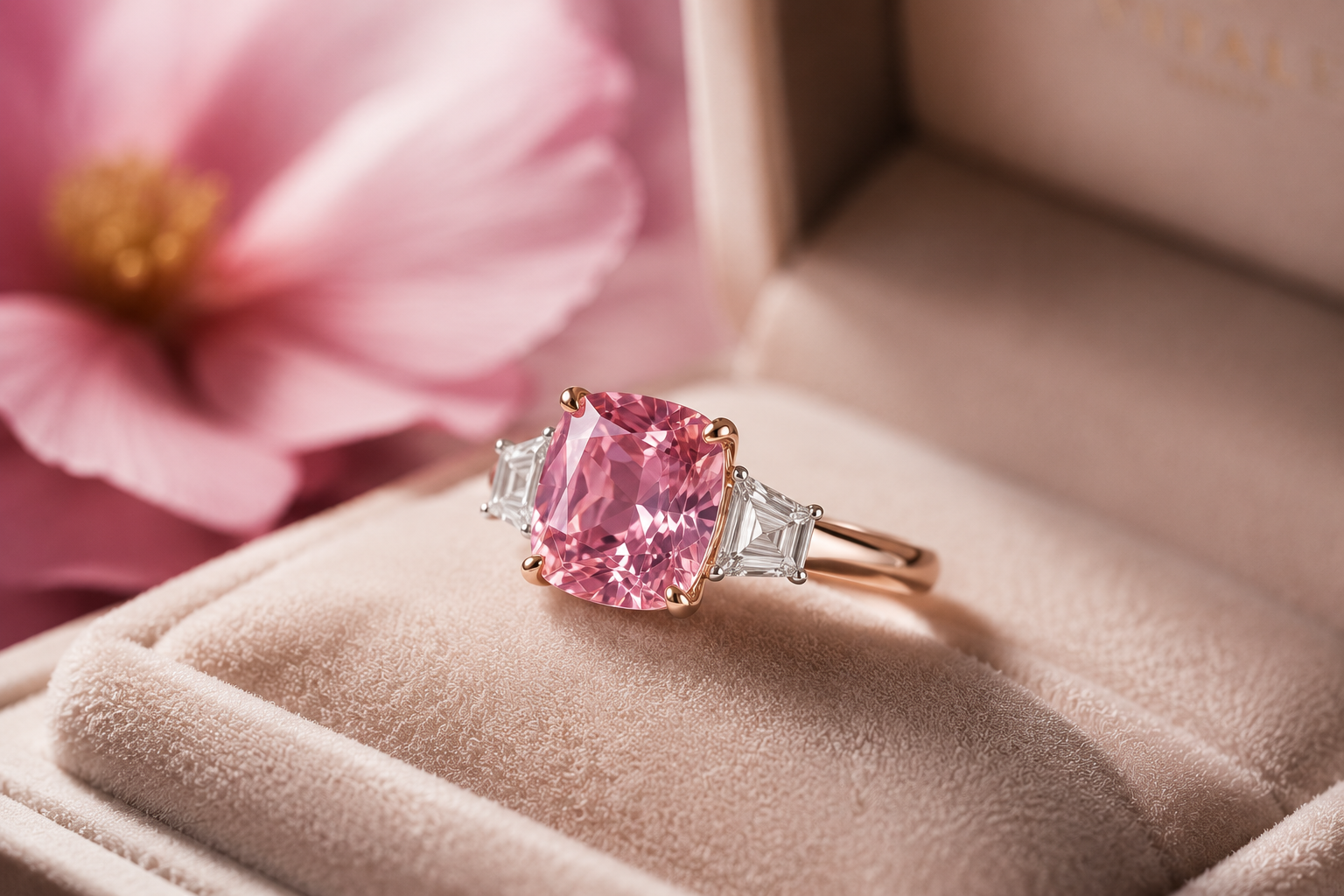
Pink sapphire is one of my favourite alternatives for someone who wants colour without losing the elegance associated with a traditional engagement ring.
Sapphire belongs to the corundum family and occurs in considerably more colours than the blue with which it is usually associated. Pink is one of its recognised fancy colours.
Its colour can range from delicate, almost pastel pinks to much stronger and more saturated tones.
It is also particularly suitable for jewellery intended to be worn frequently. Sapphire ranks 9 on the Mohs scale and has excellent toughness, making it a strong candidate for everyday rings.
A recent bespoke example is a ring centred around a 2-carat natural pink sapphire sourced from Sri Lanka (Ceylon), complemented by colourless diamonds and mounted in 18kt rose gold.
The stone came first. The design followed.
That principle is fundamental to the way I think a coloured gemstone engagement ring should be approached.
Emerald: Character Rather Than Absolute Perfection
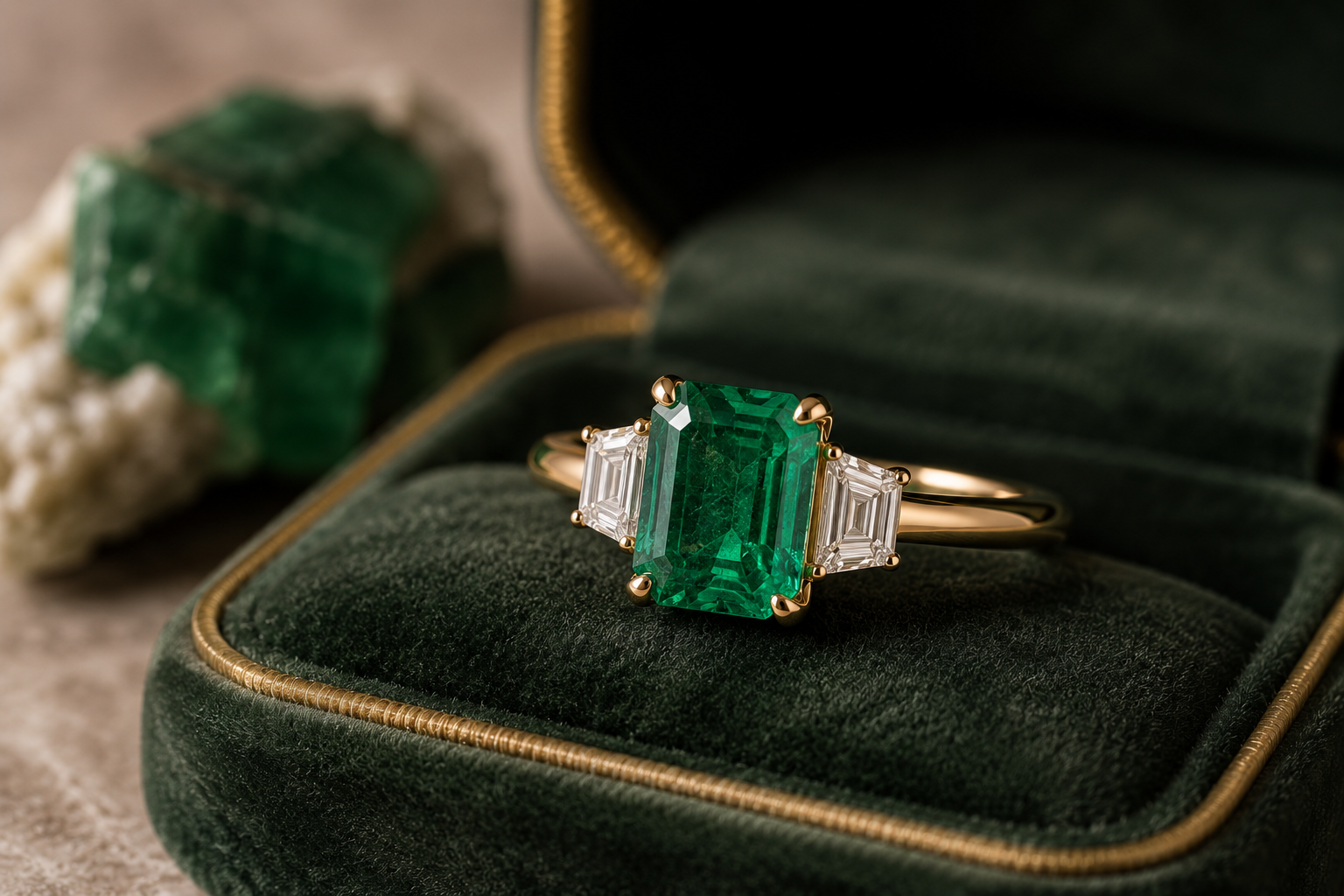
Few gemstones have the visual identity of a fine emerald.
Its green can immediately dominate a design, which means an emerald engagement ring rarely needs to be excessively complicated.
But emerald requires a different approach from sapphire.
Emeralds commonly contain inclusions and fissures, and their durability must be considered carefully when designing a ring for frequent wear. Protective setting choices can therefore become part of the design rather than simply a technical consideration.
With emeralds, I would not search for laboratory-like perfection at the expense of personality.
Colour, transparency, origin, treatment and the individual character of the stone all need to be considered together.
Explore my complete guide to Natural Emeralds →
Ruby: Intensity and Presence
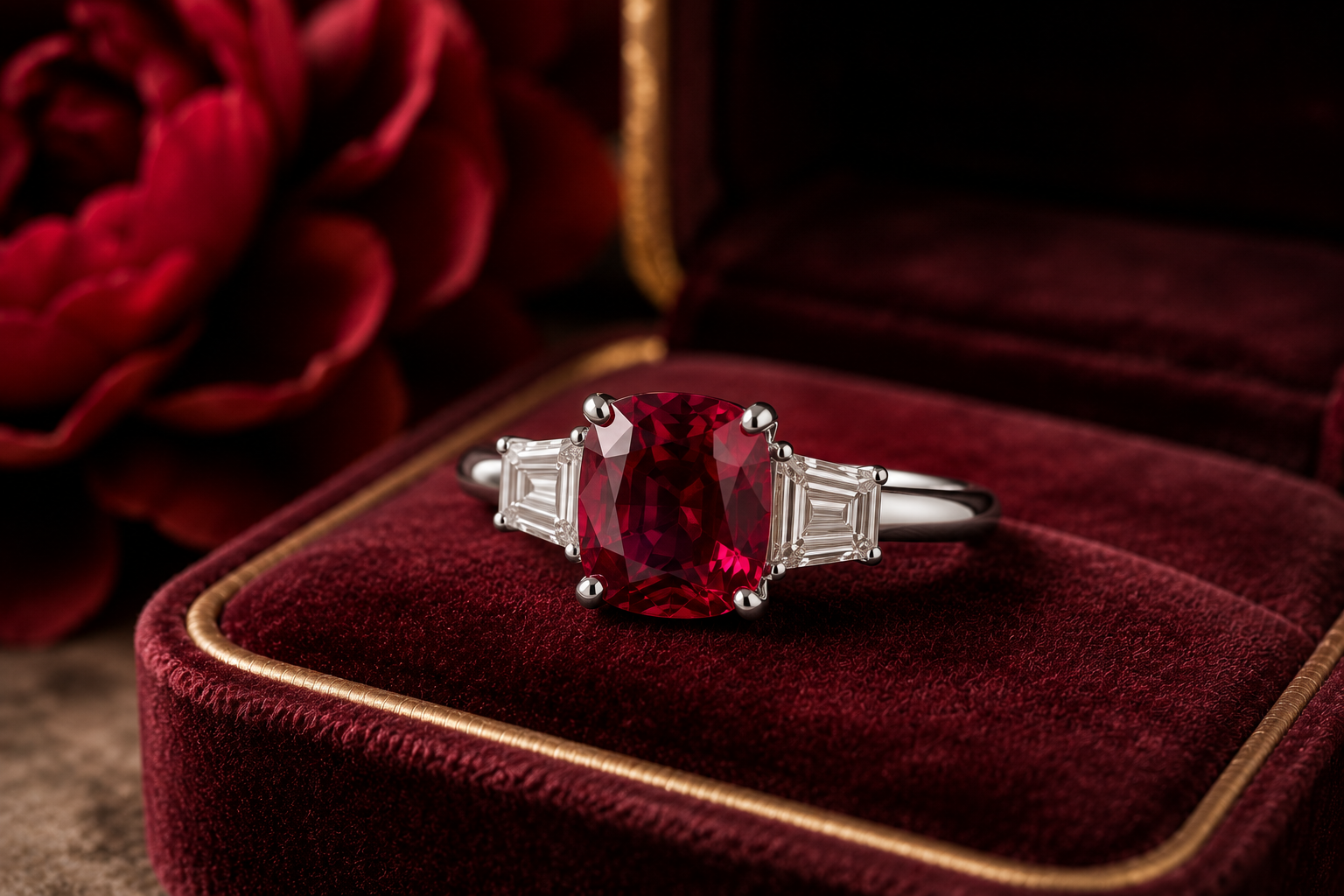
For someone who wants an engagement ring with immediate presence, ruby offers something entirely different.
Ruby and sapphire are both varieties of corundum, and ruby shares sapphire's excellent hardness of 9 on the Mohs scale. This makes both particularly compelling coloured gemstones for rings intended for regular wear.
But the visual effect could hardly be more different.
A fine ruby introduces an intense red focal point that can work beautifully with colourless diamonds, particularly when the proportions of the surrounding design allow the centre stone to remain dominant.
For exceptional stones, origin, treatment status, colour and laboratory documentation can also become important considerations when assessing the gemstone.
Paraíba Tourmaline: Electric Colour
Then there are gemstones that refuse to be subtle.
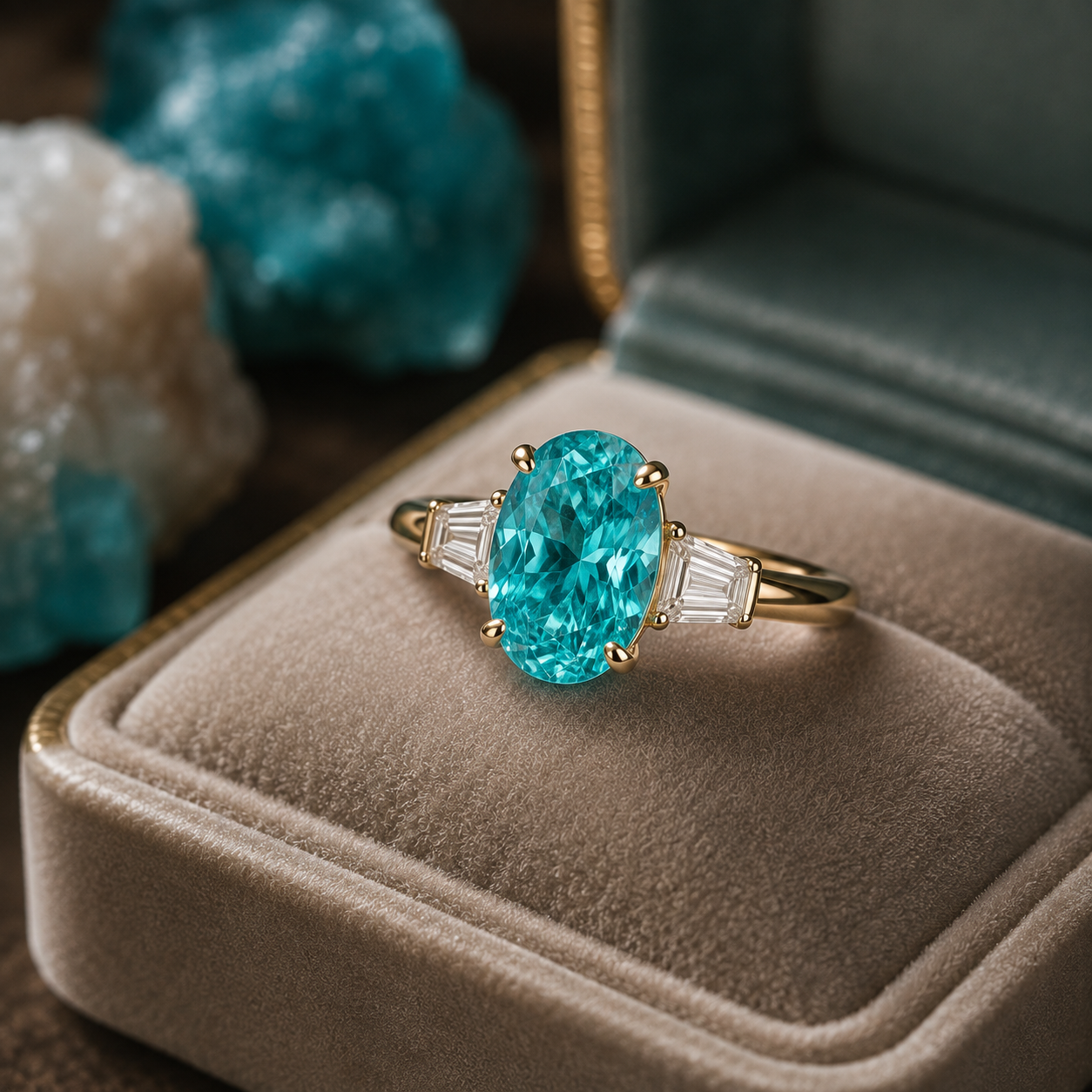
Paraíba tourmaline is immediately recognisable for the extraordinary blue-to-green colours associated with copper-bearing tourmaline.
For an engagement ring, it offers something radically different from the traditional palette.
A fine Paraíba can become the entire visual identity of the piece.
However, this is where design and lifestyle become particularly important. Tourmaline ranks below ruby and sapphire in hardness; GIA places tourmaline at approximately 7–7.5 on the Mohs scale and stresses that durability involves not only hardness, but also toughness and stability.
That does not mean it cannot become an engagement ring. It means the stone, setting and way the ring will actually be worn should be considered together.
Discover the complete Paraíba Tourmaline Guide →
Fancy Colour Diamonds: Colour Without Leaving the Diamond World
There is another possibility: keep the diamond, change the colour.
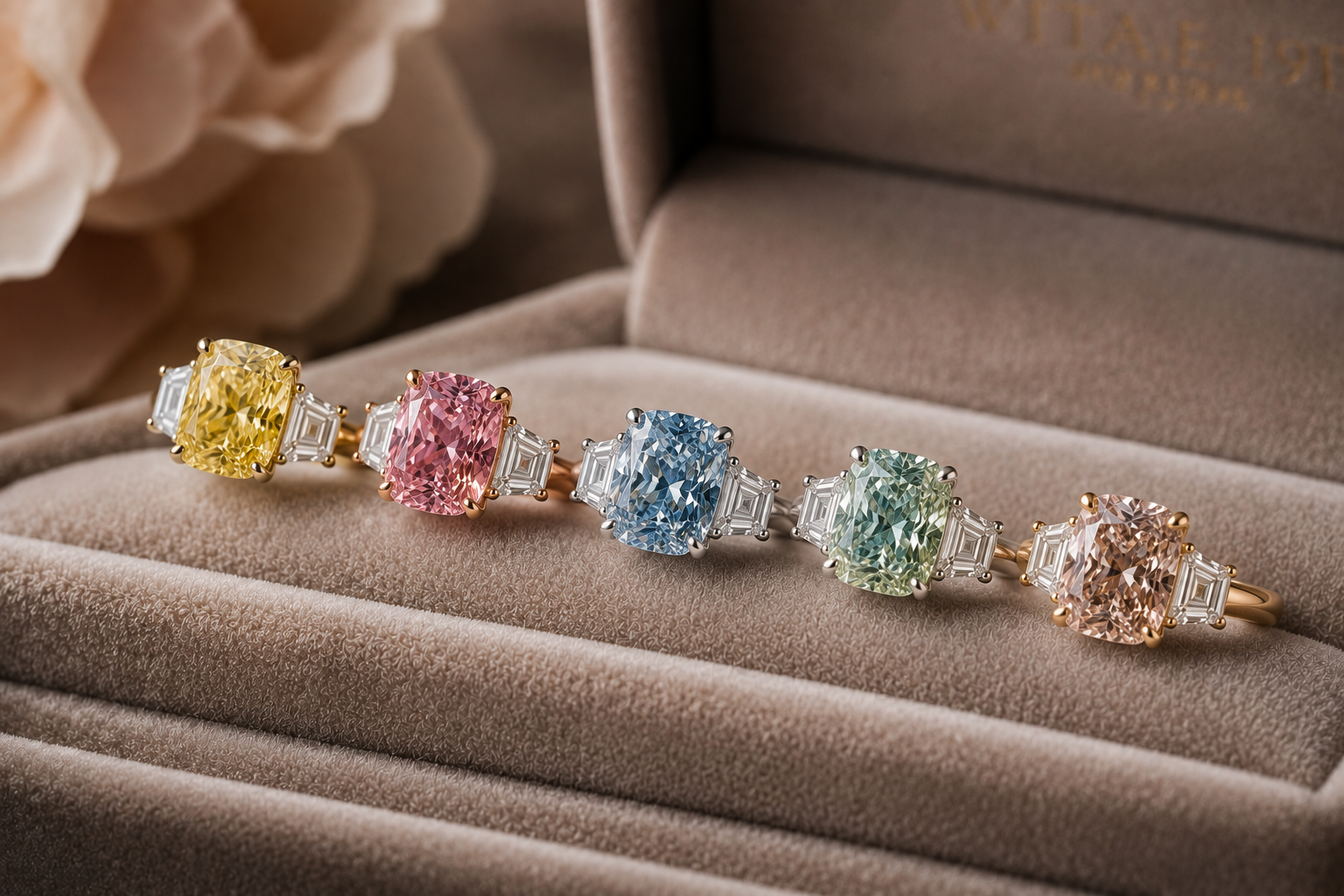
Natural Fancy Colour diamonds combine the durability and optical properties associated with diamond with colours that can range from yellow and pink to blue, green and extraordinarily rare red.
For someone attracted to a traditional diamond engagement ring but looking for something much less conventional, this can be a particularly interesting direction.
And subtle differences in hue and intensity can completely change the personality of the finished ring.
You can explore the individual guides here:
What Is the Best Coloured Gemstone for an Engagement Ring?
There is no universal answer.
A gemstone should not be selected solely because of its appearance in a photograph.
For an engagement ring, I would consider five elements together:
Colour. Which colour genuinely resonates with the person who will wear it?
Durability. How frequently will the ring be worn and how active is the wearer's lifestyle?
Character. Does the client prefer an exceptionally clean appearance or the individuality that natural inclusions can create?
Rarity and provenance. Are origin, treatment status or exceptional rarity important parts of the search?
Design. Can the setting protect the stone while preserving the proportions and visual identity that made it desirable in the first place?
This distinction matters because hardness alone does not determine durability. Toughness and stability also affect how well a gemstone withstands a lifetime of wear.
For frequent everyday use, ruby and sapphire are particularly compelling options. Emerald and tourmaline can also create extraordinary rings, but they deserve more consideration regarding setting and wear.
The Bespoke Approach: Start With the Stone
With coloured gemstones, I believe the most interesting process often works in reverse.
Do not begin with a catalogue of settings and then search for a gemstone that fits.
Begin with the stone.
Find the colour.
Find the proportions.
Find the character.
Then create the ring around it.
A bespoke design can respond to the exact dimensions of the gemstone, introduce complementary diamonds where appropriate and consider how the jewellery will actually be worn.
The result should not feel like a gemstone placed into a predetermined mounting.
It should feel as though that design could only have existed for that particular stone.
Creating a Bespoke Engagement Ring in Monaco
My bespoke process begins with understanding the person behind the commission: their preferences, lifestyle, desired gemstone, design direction and the story the finished piece should represent.
From there, the search for the appropriate natural gemstone can begin.
For clients in Monaco, the process can take place privately in person. It can also be developed remotely for international clients.
Because ultimately, choosing an engagement ring should not simply be about selecting an object.
It is about creating something that still feels personal decades after the proposal.