Engagement Ring Trends 2026: The Ultimate Guide
Why 2026 Is a Pivotal Year for Engagement Ring Trends
Over the past few years, a quiet revolution has taken place in how people approach engagement jewellery. The shift away from off-the-shelf designs towards bespoke engagement rings has accelerated significantly, driven by a generation that values individuality, sustainability, and emotional storytelling above all else.
In 2026, we are witnessing the convergence of several forces: a renewed appetite for fancy colour diamonds, a sophisticated understanding of gemstone quality, and a growing demand for custom engagement ring designs that reflect the unique bond of each couple. Whether you are drawn to a classic round brilliant or an asymmetric cluster set with a vivid pink sapphire, this is the year to look beyond the ordinary.
A bespoke ring is not simply a ring made to order — it is a wearable narrative. Every choice, from the curvature of the shank to the tilt of the centre stone, is an act of authorship.
The Top Engagement Ring Trends for 2026
1. Fancy Colour Diamonds
Perhaps the most significant shift in engagement jewellery right now is the rise of fancy colour diamonds. Yellow, champagne, cognac, and — at the pinnacle of rarity — vivid pink and blue diamonds are increasingly chosen as centre stones. These gems carry a warmth and depth that colourless diamonds cannot replicate, and their rarity gives them a story that resonates far beyond their carat weight.
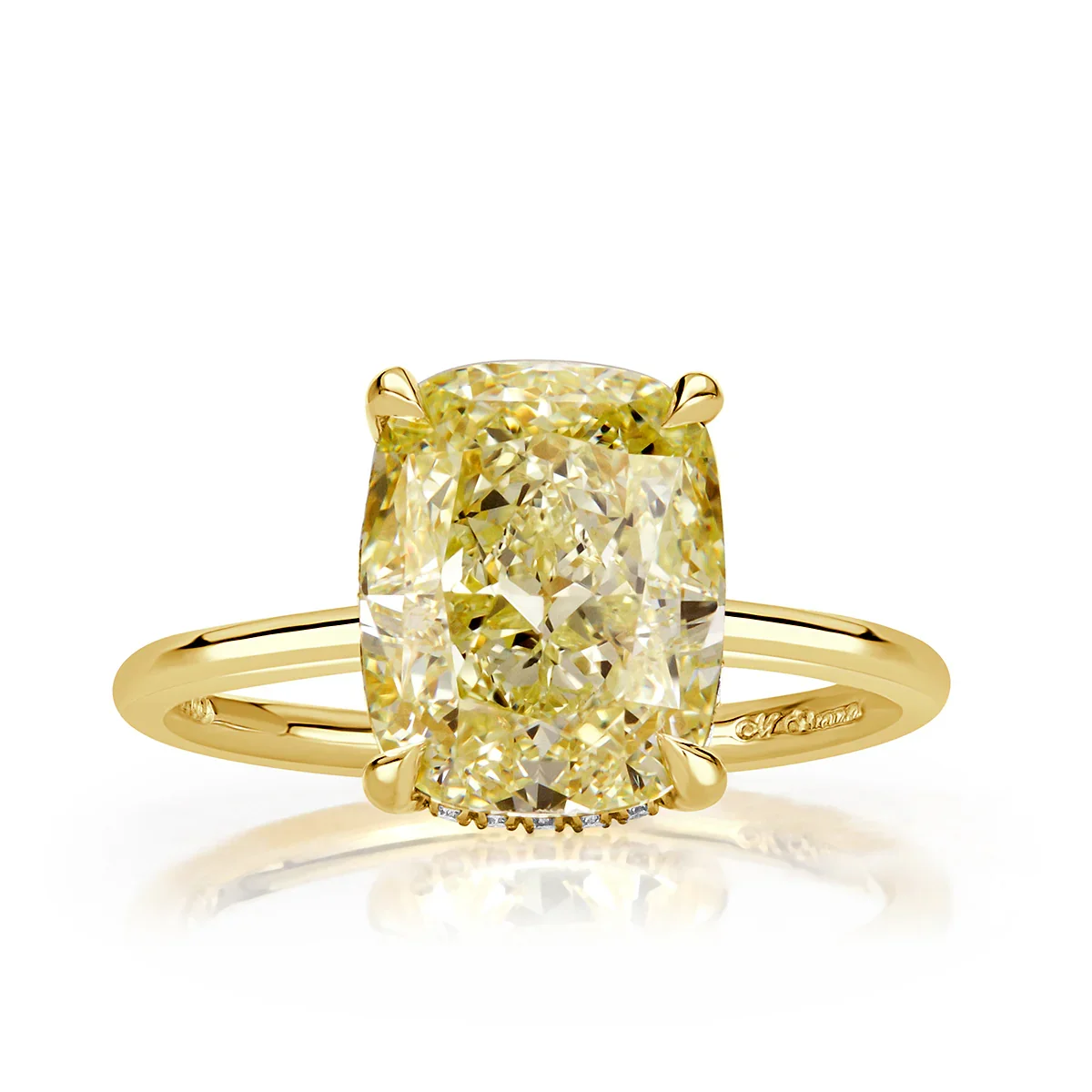
When selecting a fancy colour diamond, the dominant factor is colour intensity: the GIA grades range from Faint through to Fancy Vivid, with deeper, more saturated hues commanding exponentially higher values. An experienced diamond consultant is essential to navigate this market with confidence.
2. Coloured Gemstone Centre Stones
Sapphires, emeralds, Paraíba tourmalines, and Burmese rubies are all gaining ground as the centrepiece of modern engagement ring designs. The appeal is clear: colour carries emotion in a way that white light alone cannot. A deep cornflower blue sapphire or a vivid Colombian emerald brings personality to the piece from the very first glance.
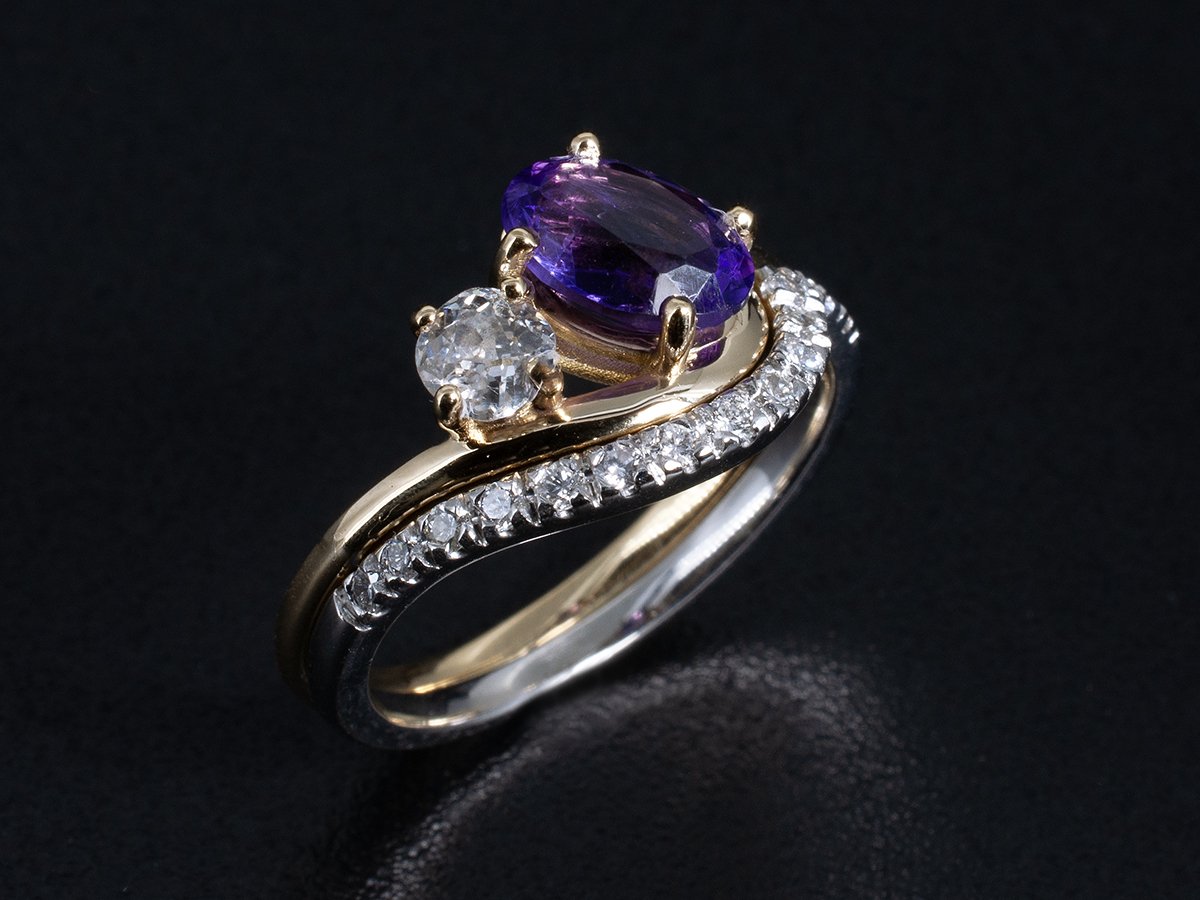
In 2026, the most sought-after coloured stones are those with a provenance story — Kashmir sapphires, Mozambique rubies, or Colombian emeralds with minor to no treatments. These are not just beautiful; they are genuinely rare, and rarity is the ultimate luxury.
3. The Return of the Solitaire — Reinvented
The classic solitaire engagement ring is experiencing a sophisticated renaissance. Rather than the uniform, mass-produced settings that dominated the early 2000s, today's solitaires are characterised by architectural refinement: hand-engraved shanks, knife-edge profiles, asymmetric prong arrangements, and delicate milgrain detailing drawn from the Art Deco and Belle Époque traditions.
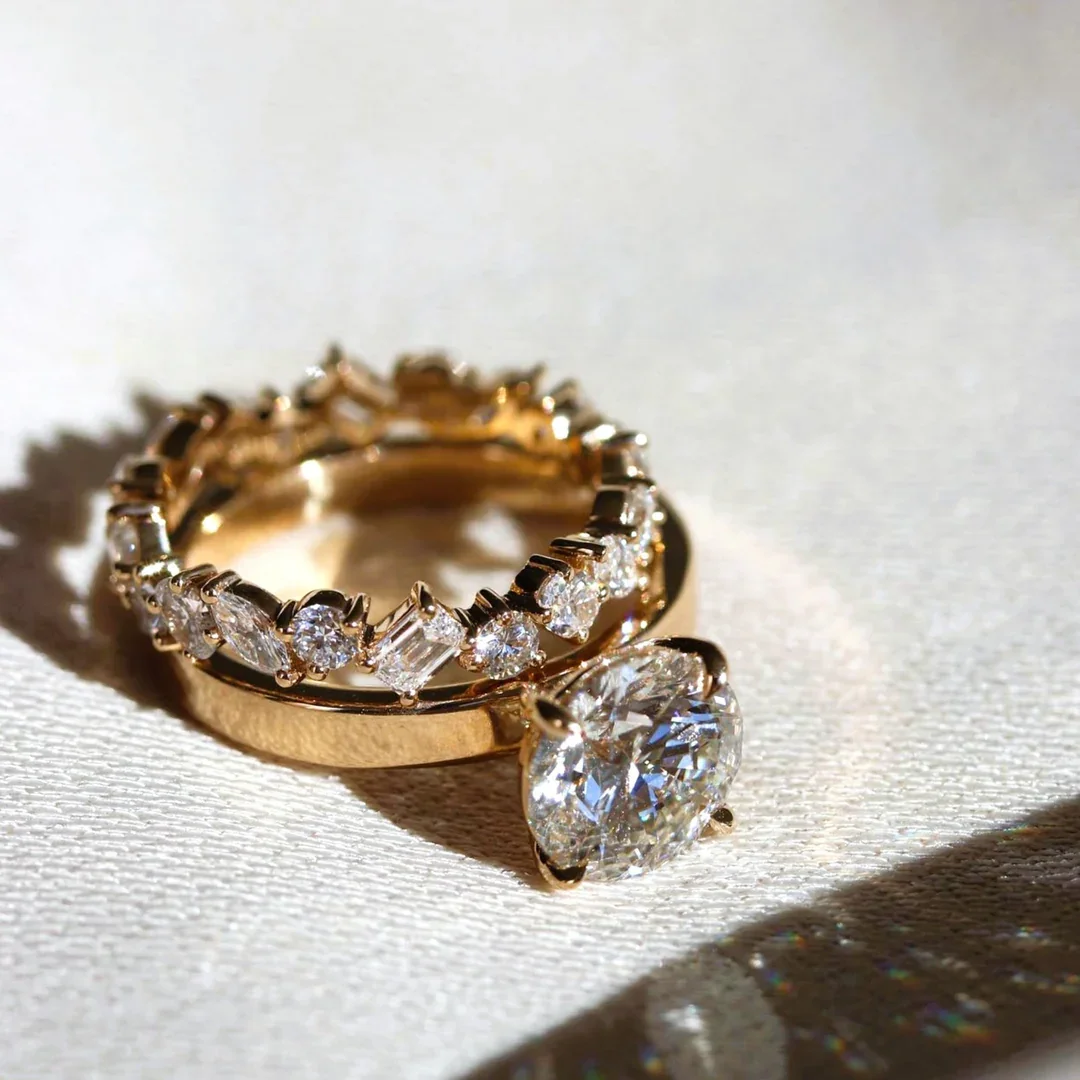
This is the engagement ring trend that rewards restraint. A single, perfectly chosen diamond — ideally an exceptional triple-excellent or hearts and arrows cut — is allowed to do all the talking.
4. Three-Stone Rings: Past, Present, Future
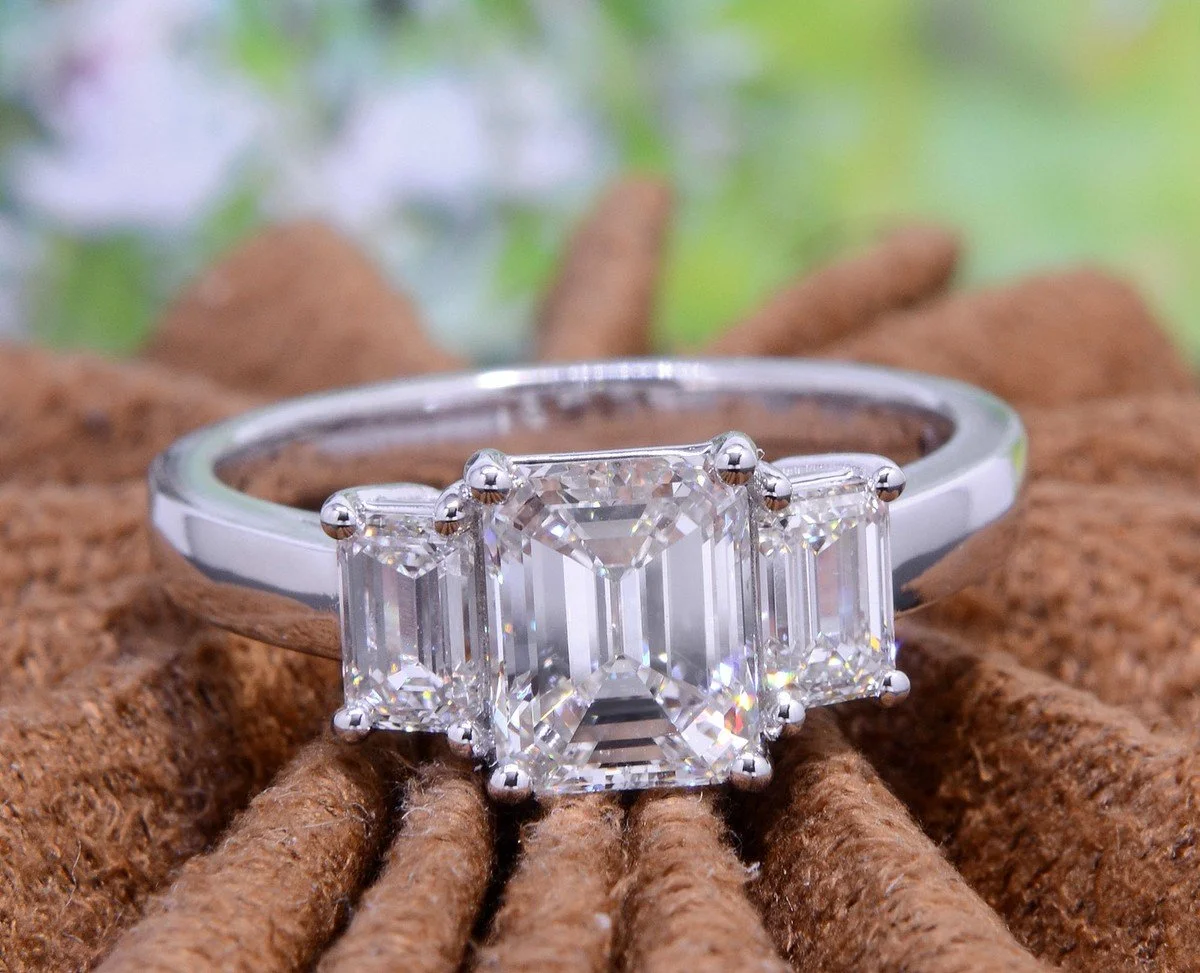
The three-stone engagement ring endures as one of the most narratively compelling choices in jewellery. Representing the past, present, and future of a relationship, these rings offer extraordinary design flexibility. In 2026, the trend leans towards mixing stone shapes — a round brilliant flanked by tapered baguettes, or an elongated oval beside two vintage-cut diamonds — and towards contrast in colour, pairing a colourless centre stone with warm pink or champagne side stones.
5. East–West Settings and Horizontal Stone Orientations
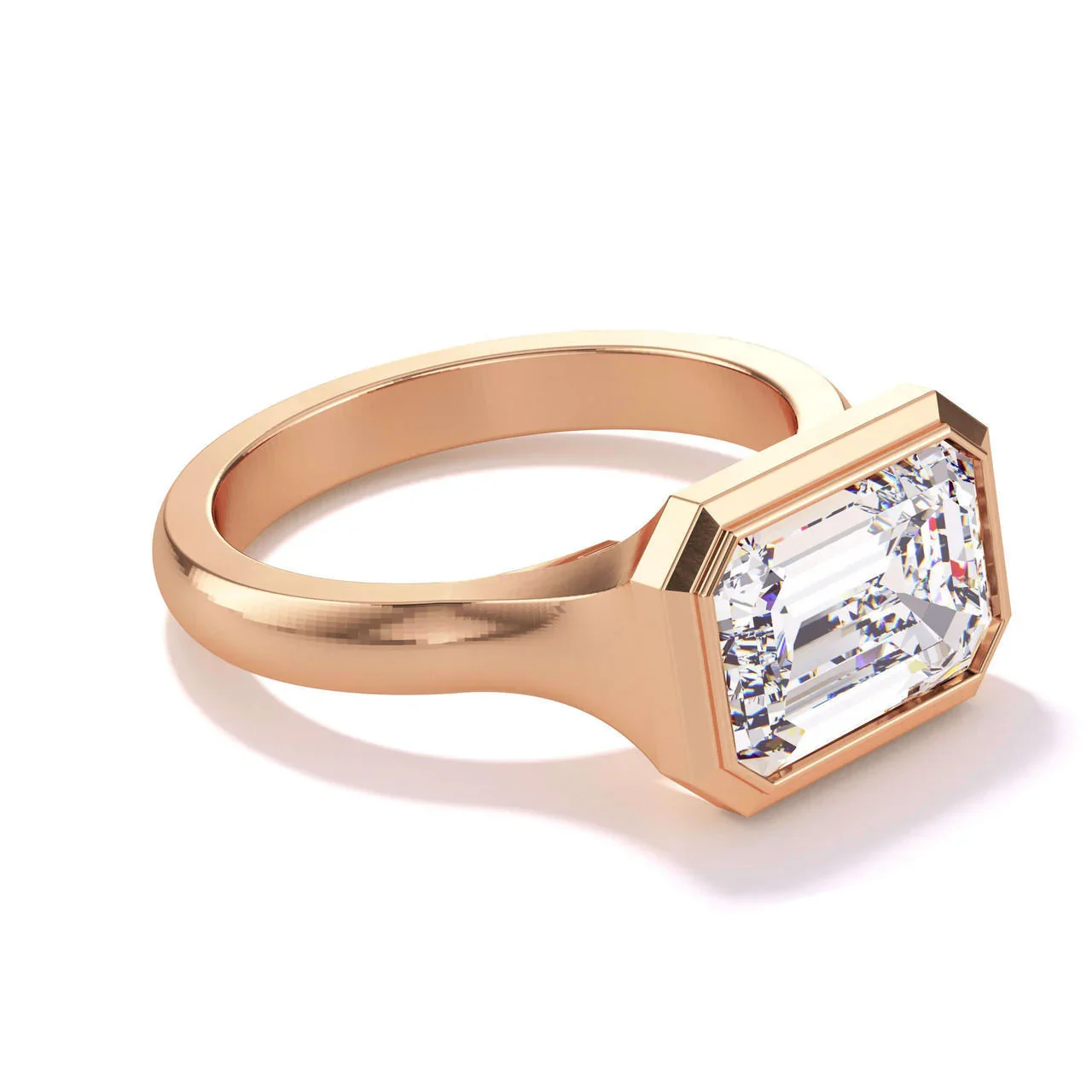
One of the most distinctive unique engagement ring formats gaining momentum this year is the east–west setting, in which an elongated stone — a marquise, an emerald cut, or an oval — is rotated 90 degrees to lie horizontal across the finger. The effect is architecturally bold, instantly modern, and particularly flattering on slender fingers. Expect this to remain a defining aesthetic of the decade.
How to Choose an Engagement Ring in 2026: A Step-by-Step Guide
Step 1 — Define the aesthetic
Before considering stones or metals, establish a visual vocabulary. Is the aesthetic romantic or architectural? Understated or maximalist? Vintage or contemporary? Gathering references — not just from jewellery, but from architecture, fashion, and art — helps a bespoke ring designer understand the emotional register you are aiming for.
Step 2 — Choose the stone
The centre stone is the heart of the ring. Whether you opt for a diamond, a coloured gemstone, or a rare fancy colour stone, prioritise the qualities you can actually see — cut quality, colour saturation, and optical character — over abstract numbers. A well-cut 1.20 ct diamond will outperform a poorly cut 1.50 ct in every meaningful way.
Step 3 — Select the metal
Platinum remains the gold standard for fine engagement jewellery: durable, hypoallergenic, and the ideal foil for colourless diamonds. For warm-toned stones, 18ct yellow or rose gold enhances saturation beautifully. White gold is a more accessible alternative to platinum but requires periodic rhodium plating. The metal choice should serve the stone — not compete with it.
Step 4 — Consider the setting style
Prong settings maximise light return and are inherently classic. Bezel settings offer a sleek, protective embrace. Pavé and micro-pavé surrounds add brilliance without overwhelming the centre. Channel-set bands lend architectural precision. Each choice affects both the aesthetics and the wearability of the ring — a factor that matters greatly for a piece worn every day.
Step 5 — Work with a specialist
An engagement ring of real quality is rarely achieved off the shelf. Working with a high jewellery designer or an independent gemstone consultant gives you access to stones and design possibilities that are simply unavailable in a retail context. The bespoke process also ensures that the ring fits your partner's aesthetic precisely — rather than being a compromise between what is available and what you actually want.
The Bespoke Process: What to Expect
The bespoke engagement ring journey typically begins with a consultation — an open conversation about aesthetic preferences, lifestyle, budget, and the story you want the ring to tell. This is followed by gemstone sourcing: presenting a curated selection of stones that meet the brief, with detailed information on origin, treatment history, and grading.
Design development involves hand-drawn or CAD-rendered sketches, refined iteratively in dialogue with the client. Once approved, the ring is crafted by master artisans — a process that in a true atelier environment involves entirely hand-worked metal techniques alongside precision stone setting. Final delivery is accompanied by full certification and provenance documentation.
The result is not merely a ring. It is an object that will be passed down through generations, carrying the specific gravity of the moment it was made for.
