Why Two Pink Diamond Top Lots Vanished Before The Auction
Just minutes before the start of their respective sales, two of the most anticipated pink diamonds of the season quietly disappeared from the catalogues. Phillips removed its 6.95 carat Fancy Vivid Purplish Pink diamond, while Sotheby’s withdrew The Glowing Rose, a 10.08 carat Fancy Vivid Pink diamond that had been widely promoted as one of the star lots of the auction calendar.
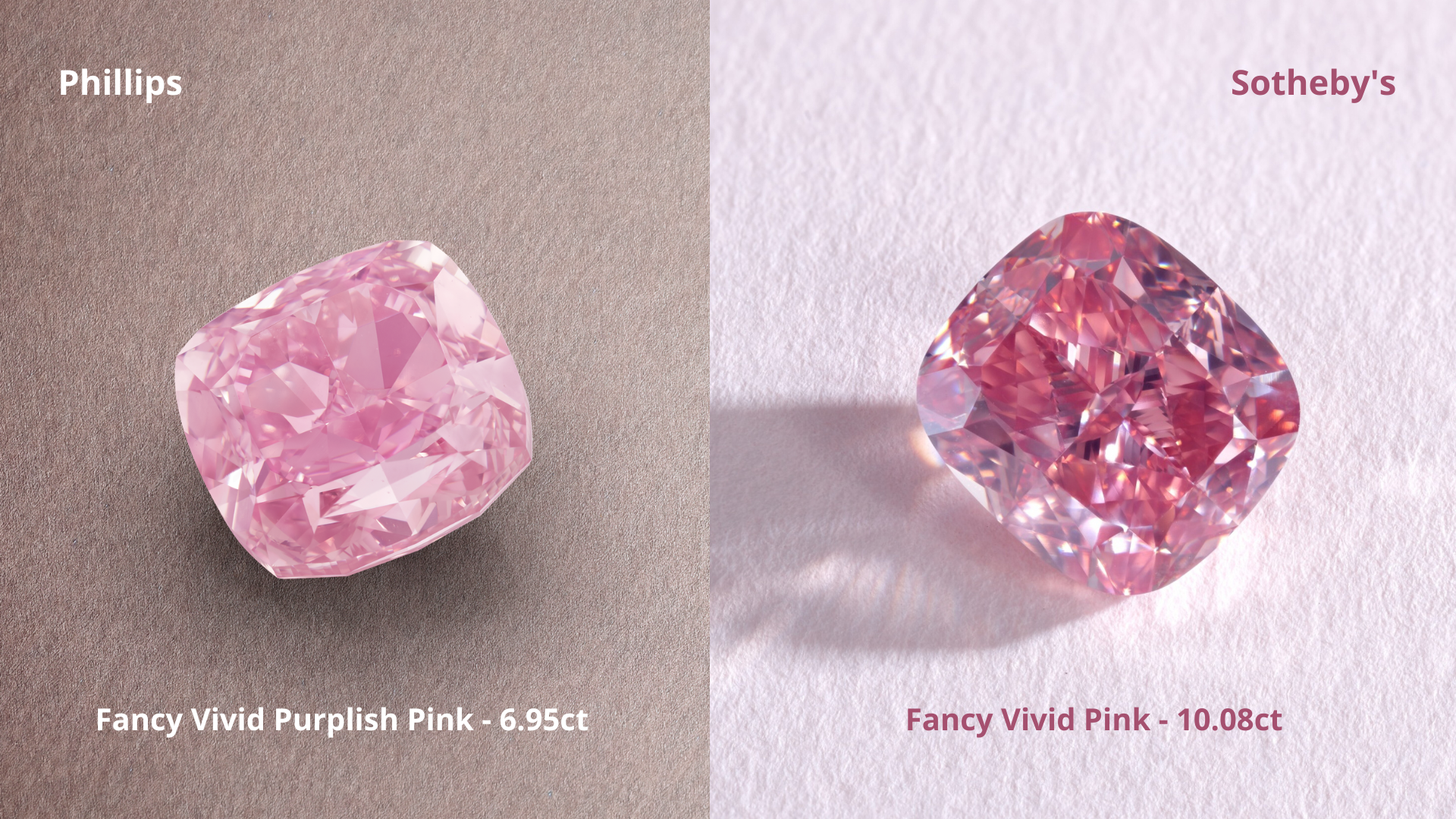
For collectors and observers, sudden withdrawals of this calibre invite speculation. The absence of any official explanation adds intrigue and raises an important question. What really leads an auction house to pull a top lot at the last moment?
There are several reasons why this can happen, and they reveal the delicate balance between market conditions, consignor expectations and brand reputation.
1. The reserve is not met during private discussions
Before the sale begins, auction houses often hold discreet conversations with potential buyers. If interest is weaker than expected or does not reach the consignor’s confidential reserve, it can be safer to withdraw the lot rather than risk a public failure. A top lot that does not meet its reserve sends a strong negative signal to the market. A withdrawn lot, on the other hand, preserves its value and its mystique.
2. Last minute disagreements between auction house and consignor
Consignors may become uneasy shortly before the sale. Perhaps the market feels softer than anticipated, or a private buyer emerges with conditions the auction house cannot accept. The consignor may also choose to delay the sale until a more favourable moment. In such cases, the withdrawal is a strategic pause rather than an issue of demand.
3. Pre sale private offers
Sometimes a strong private offer materialises minutes before the auction begins. If the price is close to or above the reserve, the consignor might opt to sell privately. It avoids uncertainty and ensures a discreet transaction. While this is less common with highly publicised top lots, it remains a possibility.
4. Protecting the market for fancy vivid pink diamonds
The pink diamond market is extremely sensitive. A major vivid pink that fails to sell publicly can influence price expectations across the sector. Auction houses know this and may prefer to remove a stone rather than allow a disappointing result that could ripple through global pricing.
This leads to the final reflection. From a reputational perspective, is it better for an auction house to let a top lot fail to meet the reserve in front of a room full of bidders, or to withdraw it five minutes before the sale without offering an explanation? While both scenarios attract attention, a withdrawal protects both the stone and the seller. A failed sale, however, becomes part of the lot’s history and can affect future valuations.
The withdrawal of two important pink diamonds on the same weekend suggests more than coincidence. It may hint at cautious pricing, shifting market sentiment or simply the growing awareness that rare pinks require perfect conditions to achieve the right result. When a diamond disappears before it ever reaches the rostrum, the story behind that decision often reveals as much about the market as the sale itself.
Images Credits: Phillips and Sotheby’s