Cartier Tutti Frutti: History, Art Deco Origins and Auction Prices
Few jewellery styles encapsulate the intellectual daring, technical mastery and cultural openness of early twentieth century high jewellery quite like the Tutti Frutti collection by Cartier. More than a decorative aesthetic, Tutti Frutti represents a pivotal moment in jewellery history when European maison traditions encountered Indian craftsmanship, redefining colour, form and symbolism in fine jewellery.
Today, these jewels rank among the most sought-after creations ever produced by Cartier, commanding extraordinary prices at auction and standing as museum-worthy artefacts of the Art Deco period.
Origins and historical context
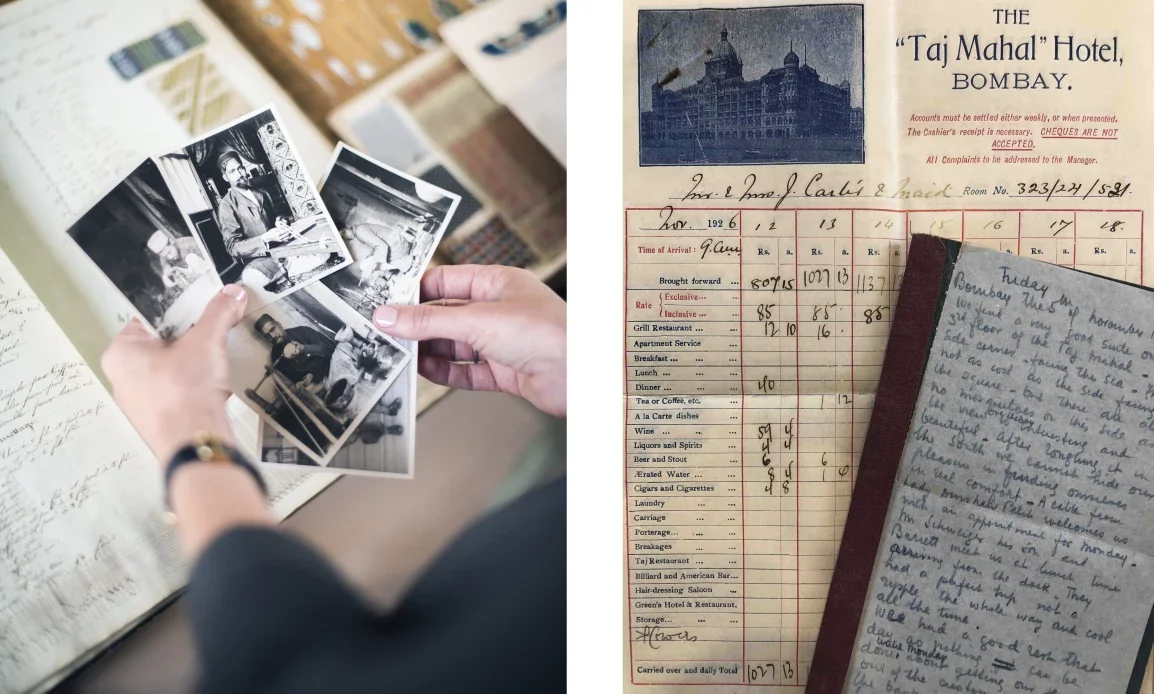
The Tutti Frutti style emerged during the 1910s and flourished throughout the 1920s and early 1930s, a period marked by global travel, cultural curiosity and aesthetic liberation. Cartier’s brothers, particularly Jacques Cartier in London, developed close relationships with Indian royalty, frequently travelling to the subcontinent to source exceptional gemstones and commission traditional carvings.

Indian jewellers had long mastered the art of carving emeralds, rubies and sapphires into leaves, berries and blossoms, a practice deeply rooted in Mughal jewellery traditions. Rather than dismantling these carvings, Cartier did something radical for a Parisian house of the time: it celebrated them. The maison reinterpreted these colourful elements through a European lens, mounting them in platinum and diamonds using the newly developed technical language of Art Deco. The result was a striking juxtaposition of saturated colour and crisp geometry, organic forms contained within architectural structures. The term Tutti Frutti, coined later by Cartier, perfectly captured this abundance of colour and playful exuberance.
Design language and gemmological significance
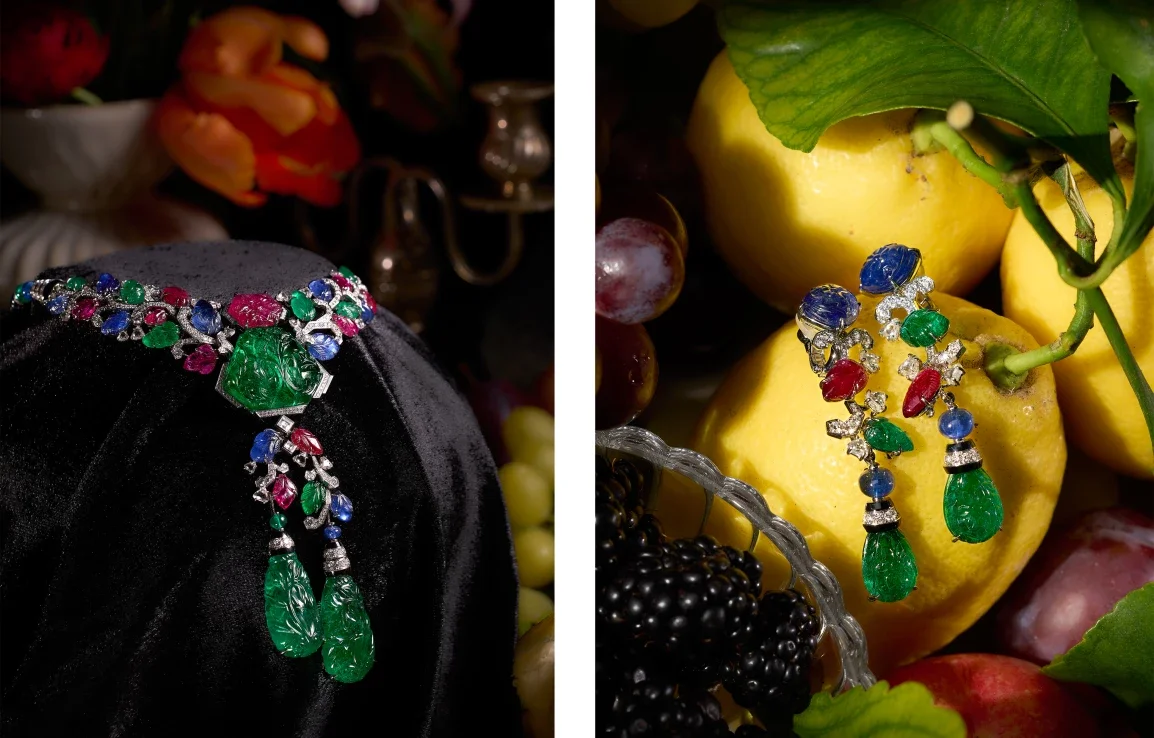
Tutti Frutti jewels are instantly recognisable. They typically combine carved emerald leaves, ruby berries and sapphire accents, set against a dense framework of diamonds in old European, single and baguette cuts. Platinum became the metal of choice, allowing gemstones to float visually while providing the strength needed for complex openwork designs. From a gemmological perspective, these pieces are remarkable for the quality of their coloured stones. Colombian emeralds with vivid saturation and jardin inclusions were favoured, alongside Burmese rubies of intense red and sapphires ranging from deep royal blue to softer cornflower tones. The diamonds, though not always flawless by modern standards, were carefully selected for brilliance and harmony rather than numerical perfection.
What makes Tutti Frutti exceptional is not only the individual quality of the stones, but their orchestration. Colour was treated compositionally, decades before colour theory became a formalised design discipline in jewellery.
The Art Deco spirit and Cartier’s creative leadership
The Tutti Frutti style aligned perfectly with the broader Art Deco movement, which embraced modernity, abstraction and global influences. Within Cartier, figures such as Jeanne Toussaint played a crucial role in pushing creative boundaries, encouraging bolder colour contrasts and freer forms at a time when restraint was still the norm in European high jewellery. Unlike many contemporaries, Cartier did not dilute the exoticism of Indian carvings. Instead, it elevated them, allowing asymmetry, texture and depth to coexist with Parisian refinement. This balance between control and exuberance became a defining trait of the maison.
During the 1920s and 1930s, Tutti Frutti jewels were among Cartier’s most expensive creations, often commissioned by aristocratic families, American heiresses and royal clients. While precise retail prices are difficult to standardise due to bespoke commissions, major Tutti Frutti necklaces and bracelets were priced at levels comparable to grand diamond parures of the period, already placing them at the very top of the market.However, their modern value has eclipsed all historical benchmarks. As scholarship around Art Deco jewellery deepened and collectors began to understand the rarity of intact Tutti Frutti pieces, demand surged dramatically.
Tutti Frutti at auction today
In recent decades, major auction houses such as Sotheby's and Christie's have repeatedly demonstrated the market’s appetite for Tutti Frutti jewels. Exceptional bracelets and necklaces routinely achieve prices in excess of several million pounds, with record examples surpassing £10 million depending on provenance, condition and complexity. Bracelets from the late 1920s with dense carved elements and original configurations are particularly prized. Necklaces featuring detachable elements or sautoir proportions also command significant premiums. Provenance plays a critical role, especially when pieces can be traced back to prominent collectors or noble families.
Importantly, collectors increasingly value originality over restoration. Pieces retaining their original carved stones, diamond settings and articulation are considered exponentially rarer than those altered in later decades.
Why Tutti Frutti still matters
Beyond their monetary value, Tutti Frutti jewels occupy a unique intellectual position in jewellery history. They challenge Eurocentric narratives of design, highlighting a genuine collaboration between cultures rather than superficial appropriation. They also represent a moment when jewellery moved away from rigid symmetry and monochrome palettes towards emotional expression through colour. For contemporary collectors, Tutti Frutti is not merely an Art Deco curiosity. It is a statement of connoisseurship, an understanding of gem history, craftsmanship and cultural dialogue. In a market increasingly driven by rarity and narrative, these jewels stand at the intersection of all three.
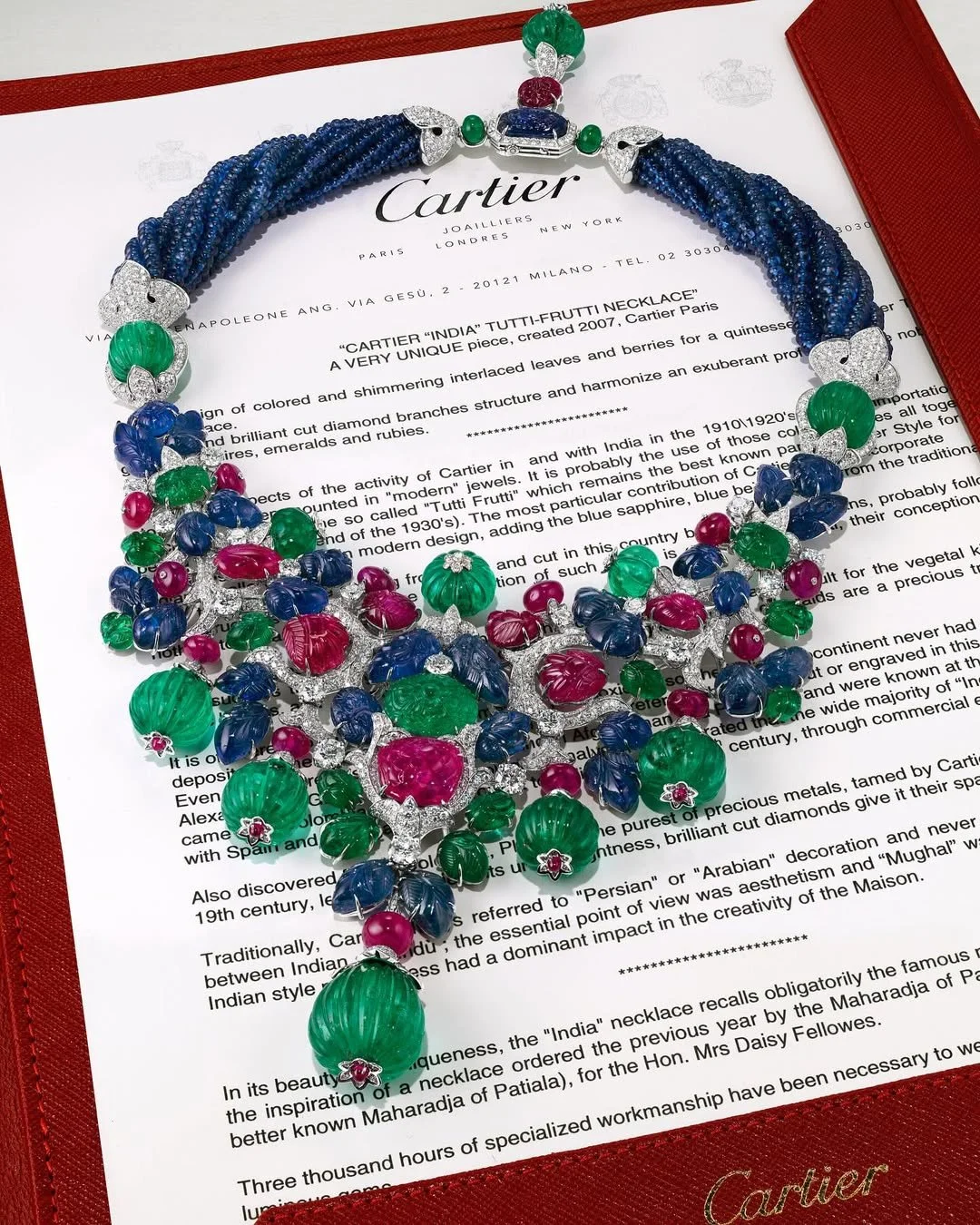
Today, Cartier occasionally revisits the Tutti Frutti language in its high jewellery collections, though original vintage examples remain in a category of their own. Each historic piece tells a story of travel, technical innovation and aesthetic courage, one that continues to resonate a century later.
Images Credits: Francesca Cartier Brickell & Sotheby’s