Why Mahenge Spinel Became One of the Most Desired Coloured Stones
In the contemporary world of fine gemstones, few discoveries have reshaped perceptions of value and rarity as dramatically as the Mahenge spinel. Once overshadowed by ruby and sapphire, spinel has emerged over the past two decades as a serious collector stone, and Mahenge has become its most celebrated origin. Defined by extraordinary colour, limited supply and growing demand among high jewellery houses, Mahenge spinel now occupies a unique position between gemological fascination and long term investment potential.
Geological origin and discovery
Mahenge spinel takes its name from the Mahenge Valley in south eastern Tanzania, a remote and geologically complex region characterised by metamorphic rock formations rich in magnesium and aluminium. Spinel forms under high temperature and pressure conditions, often alongside corundum, yet its crystal structure and chemistry are entirely distinct. The Mahenge deposit was first brought to international attention in the early 2000s when unusually vivid pink to red spinels began appearing on the market. Unlike traditional spinels from Myanmar or Sri Lanka, these stones displayed an intense neon saturation that seemed almost internally lit. The effect is caused by a specific balance of chromium and iron within the crystal lattice, combined with exceptional transparency.
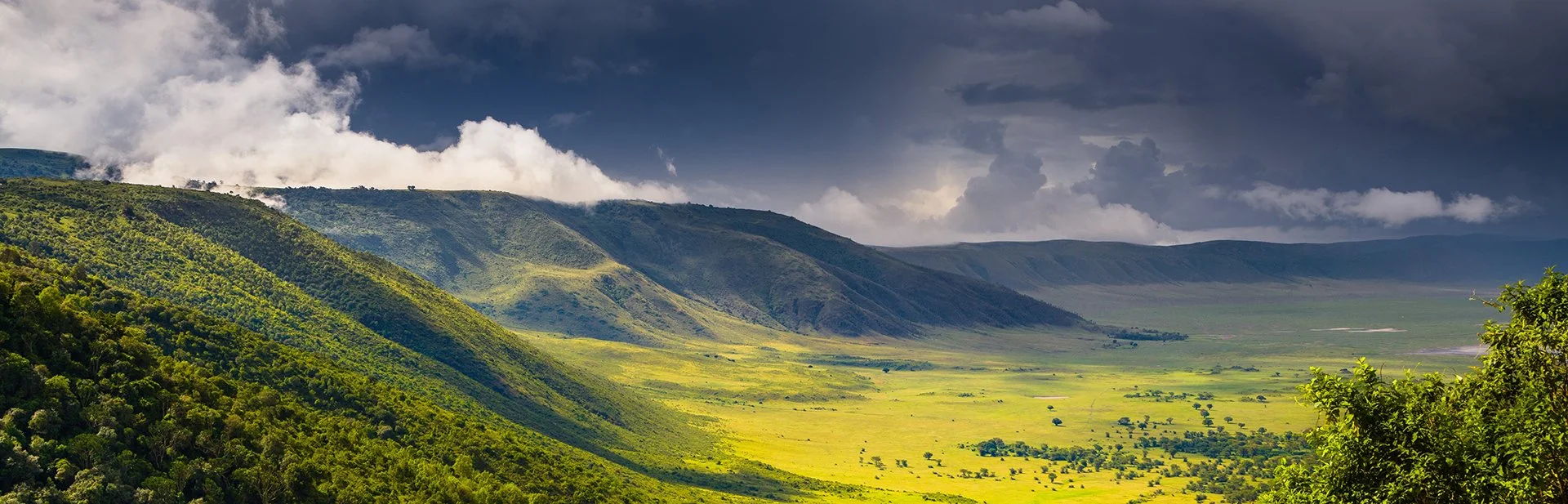
Production from Mahenge has always been limited. Mining remains largely artisanal, with output fluctuating significantly year by year. This scarcity is not artificial but geological, and it plays a central role in the stone’s rapid rise in value.
Historical context of spinel
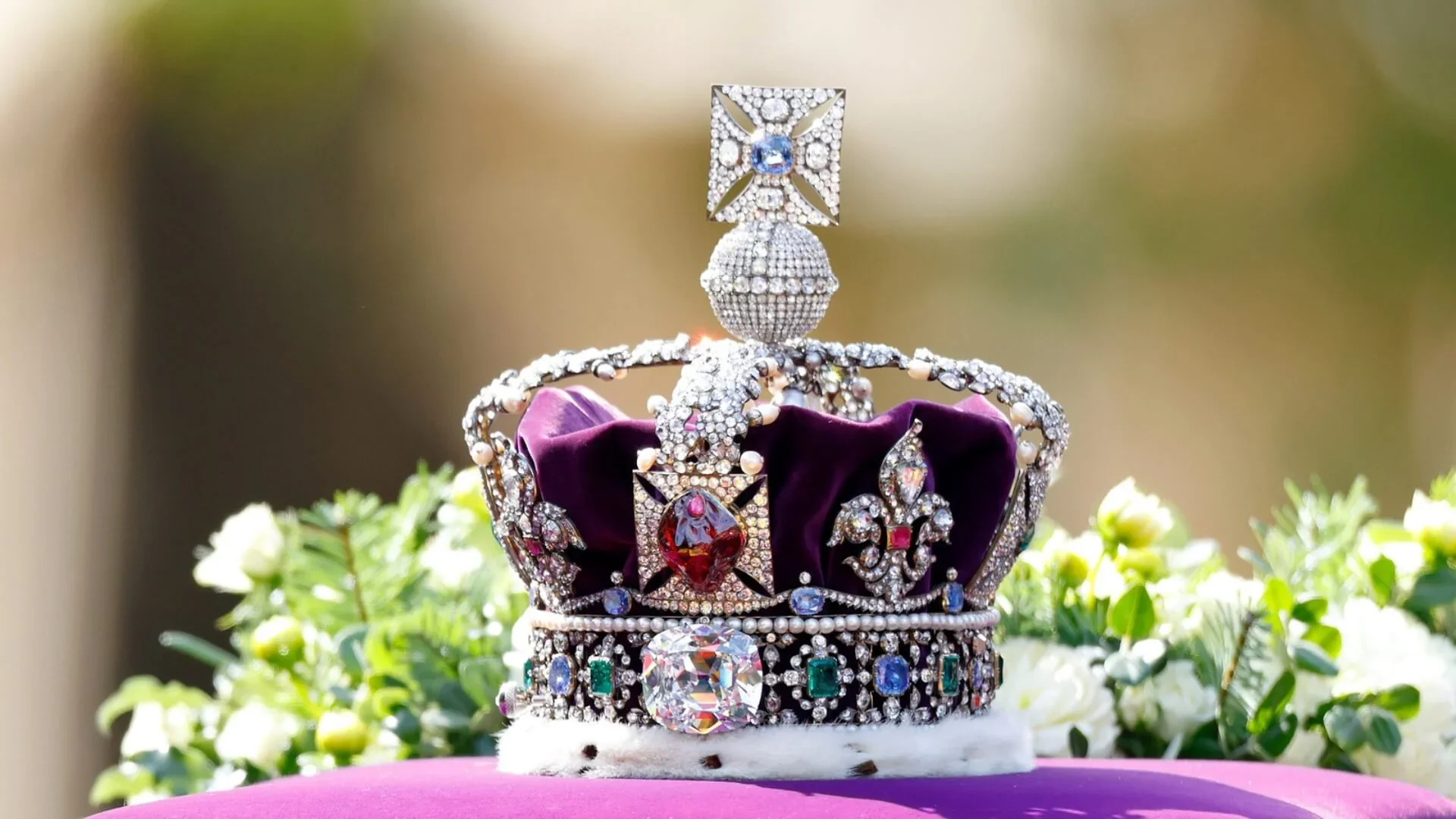
Historically, spinel suffered from a problem of identity. For centuries it was confused with ruby, leading to some of the most famous gemstones in royal collections being misattributed. The so called Black Prince’s Ruby in the British Crown Jewels is in fact a red spinel, as are several historic stones in European and Asian regalia. It was only in the late nineteenth century, with advances in mineralogy, that spinel was formally recognised as a separate species. Despite this, it remained commercially undervalued throughout much of the twentieth century, seen as a substitute rather than a destination stone. Mahenge changed that narrative entirely, shifting spinel from historical curiosity to contemporary icon.
Colour and gemological characteristics
Mahenge spinels are prized primarily for their colour. The finest examples range from hot pink to purplish red, often described as neon or electric. This visual intensity is not reliant on fluorescence but on high light return and chromatic purity. From a gemological perspective, spinel is a robust stone with a hardness of 8 on the Mohs scale, excellent toughness and no cleavage. These properties make it highly suitable for jewellery, particularly rings, without the durability concerns associated with emerald or other softer gems.
Clarity in Mahenge spinel is often exceptional. Clean stones above two carats are rare, and stones exceeding five carats with top colour are considered exceptional by any standard.
Treatments and transparency
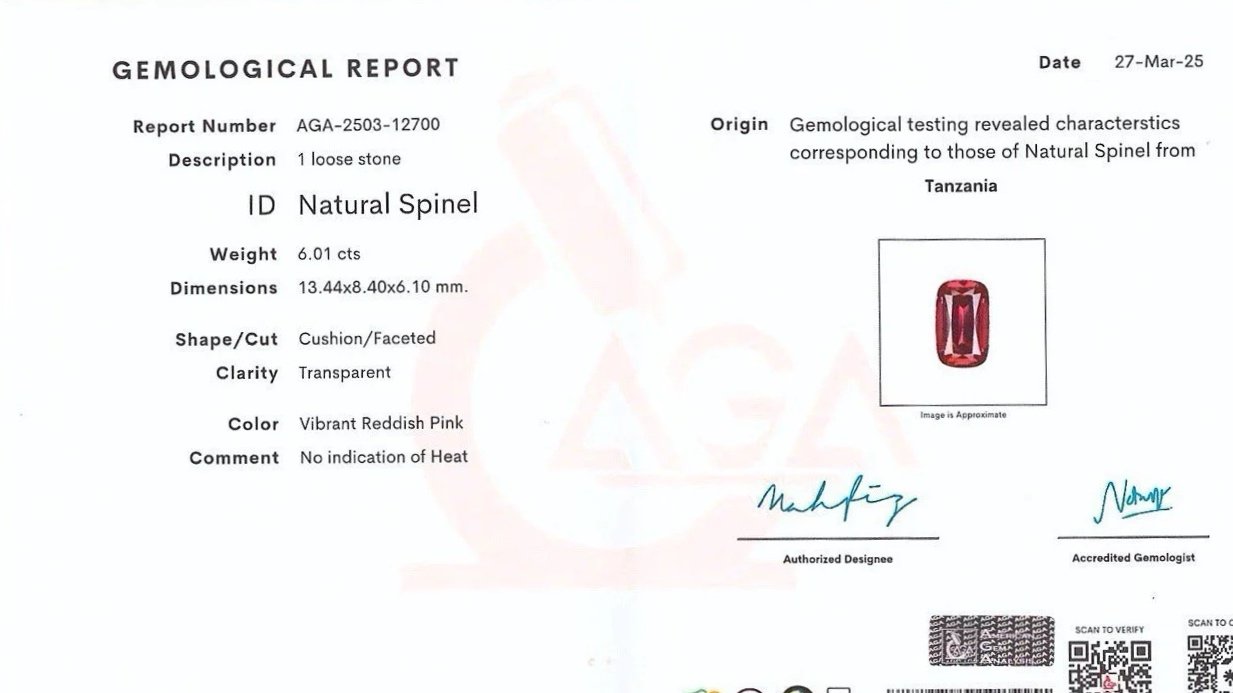
One of the defining advantages of spinel, and Mahenge spinel in particular, is the absence of routine treatments. Unlike ruby and sapphire, spinel is not commonly heated, filled or diffused. The vast majority of Mahenge stones on the market are completely untreated, a fact that significantly enhances their appeal to collectors and investors. This natural purity aligns strongly with current market preferences for transparency, traceability and disclosure. Certification from respected gemmological laboratories consistently confirms the untreated status of these stones, reinforcing buyer confidence.
Market value and pricing dynamics
Over the past fifteen years, Mahenge spinel prices have increased dramatically. Fine stones that once traded at a few hundred euros per carat now command several thousand, with exceptional specimens exceeding five figures per carat at retail. Auction results and private sales indicate continued upward pressure, particularly for stones with verified Mahenge origin and strong colour.
Pricing is influenced by several key factors: saturation, hue balance, size and clarity. Pure pinkish red stones without brown or grey modifiers achieve the highest values. Larger sizes exponentially increase rarity rather than following linear price curves.
Investment potential
From an investment perspective, Mahenge spinel occupies an intriguing position. It combines limited geological supply, growing global recognition and strong adoption by high jewellery maisons. Unlike diamonds, spinel is not a commoditised market, which reduces price transparency but also insulates it from short term volatility.
For collectors, Mahenge spinel offers portfolio diversification within the coloured gemstone sector. While liquidity is lower than for ruby or sapphire, demand at the top end is increasingly international, driven by Asian, European and Middle Eastern buyers. Long term value appreciation appears structurally supported, provided stones are well selected, properly certified and preserved in untreated condition.
Mahenge spinel in high jewellery
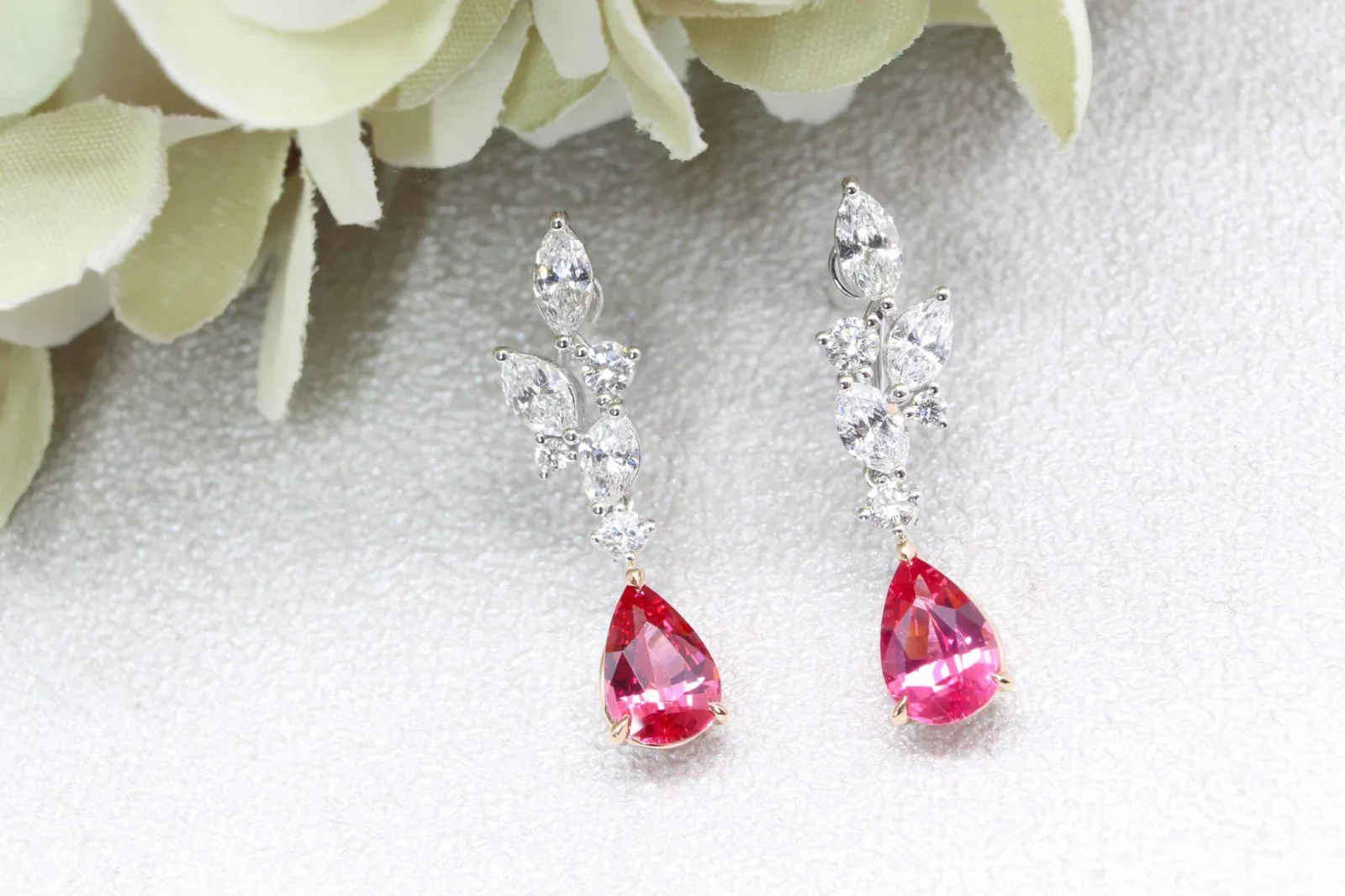
Leading jewellery houses have increasingly embraced Mahenge spinel for bespoke and one of a kind creations. Its colour photographs exceptionally well and offers designers a contemporary alternative to ruby without sacrificing prestige. As storytelling becomes central to luxury, the narrative of Mahenge as a modern discovery from a single, finite source adds considerable emotional value.
Mahenge spinel represents one of the most compelling gemstone stories of the twenty first century. A stone once overlooked has become a benchmark for purity, colour and rarity, reshaping the hierarchy of coloured gems. Whether appreciated for its beauty, collected for its scarcity or considered as a long term asset, Mahenge spinel stands as a reminder that true value in gemstones is often discovered quietly, far from established centres, and recognised only by those willing to look closely.
Images Credits: Mahenge Gems and Diamond Buzz