Carat Weight vs Visual Impact
One of the most common misconceptions in the world of diamonds is the idea that carat weight equals size. In reality, the relationship between how much a diamond weighs and how large it appears is far more complex. This became particularly clear to me during a recent conversation with a client who had a very precise request in mind: a specific carat number. Like many buyers, their focus was entirely on weight, with little consideration given to how the diamond would actually look once worn.
It is an understandable instinct. Carat weight is measurable, objective and prominently displayed on every certificate. But when it comes to aesthetics, it tells only part of the story.
What Carat Weight Really Measures
Carat is a unit of weight, not size. Two diamonds with the same carat weight can look surprisingly different when placed side by side. This is because weight is distributed across three dimensions, not just the surface that we see from above. Depth plays a crucial role. A diamond that carries more of its weight in the pavilion may be heavier without appearing larger face-up. Conversely, a diamond that spreads its weight across the surface can look significantly bigger while weighing exactly the same. This is where proportions and measurements in millimetres become essential.
When a diamond is worn, what the eye perceives is its face-up appearance. The length and width in millimetres determine how much visual space the stone occupies on the finger. For this reason, two diamonds of equal carat weight but different proportions can create very different visual impressions. A well-proportioned stone with generous spread will often appear more impressive than a heavier stone with poor proportions, so understanding millimetre dimensions allows clients to move beyond numbers and focus on what truly matters aesthetically.
When a diamond is worn, what the eye perceives is its face-up appearance. The length and width in millimetres determine how much visual space the stone occupies on the finger. For this reason, two diamonds of equal carat weight but different proportions can create very different visual impressions. A well-proportioned stone with generous spread will often appear more impressive than a heavier stone with poor proportions, so understanding millimetre dimensions allows clients to move beyond numbers and focus on what truly matters aesthetically.
The Role of Diamond Shape in Visual Presence
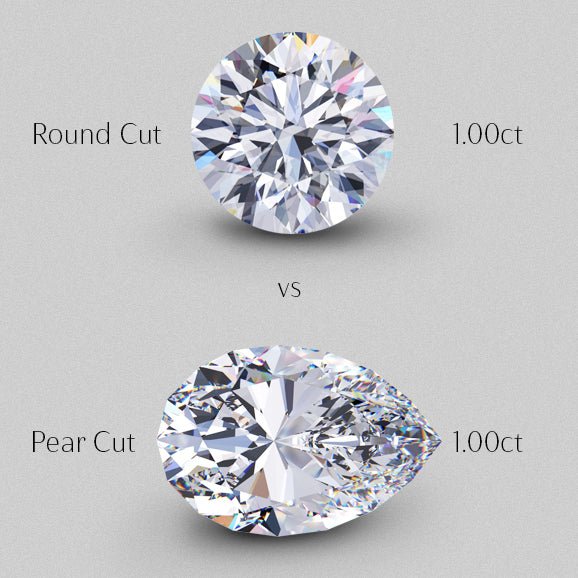
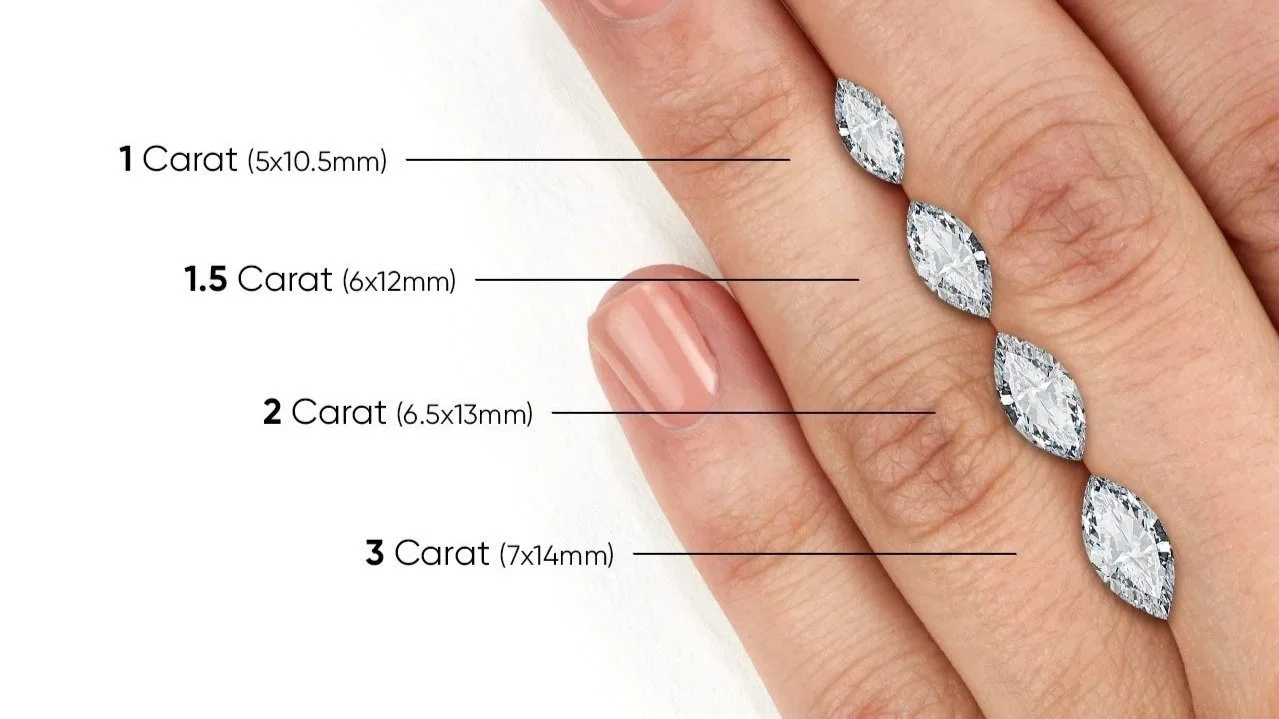
Diamond shape has a major impact on perceived size. Round brilliant diamonds are designed to maximise brilliance and symmetry, but they are also the most compact shape in terms of surface area. Elongated shapes such as pear, oval and marquise distribute the same carat weight over a larger outline. As a result, they often appear noticeably larger face-up compared to a round diamond of equal weight. A pear-shaped diamond, for example, benefits from its length and tapered form, creating an elegant silhouette that enhances visual presence without increasing carat weight. This difference is not subtle when the stones are viewed side by side.
Rethinking Value in Diamond Selection
Focusing exclusively on carat weight can lead to missed opportunities. Clients who prioritise visual impact often discover that they can achieve a more striking result without increasing their budget, simply by choosing the right shape and proportions. This does not mean that carat weight is unimportant. It remains a fundamental factor in diamond valuation. However, it should be considered alongside cut quality, dimensions and overall visual balance, not in isolation.